Best Monsoon Places Near Mumbai: A Complete Travel Guide 2026

There’s a particular kind of magic that happens to the hills around Mumbai the moment the monsoon arrives. The brown, sun-baked slopes you drove past in April suddenly turn an impossible shade of green. Waterfalls that don’t exist for nine months of the year come roaring back to life. The air smells like wet earth and chai, and every turn on the ghat road hides another cloud sitting quietly in a valley.
If you’ve been staring out of your office window watching the first showers hit the road and felt that familiar itch to just get in the car and drive — this guide is for you. We’ve put together the best monsoon places near Mumbai, all reachable over a weekend, whether you’re travelling solo, on a bike with friends, with your partner, or packing the whole family into the car.
This isn’t a generic list copied off the internet. Every place here has been chosen for what it actually offers during the rains — the waterfalls that are worth the trek, the food you shouldn’t miss, and honestly, the spots you should skip when the crowds get out of hand. Let’s plan your monsoon escape.
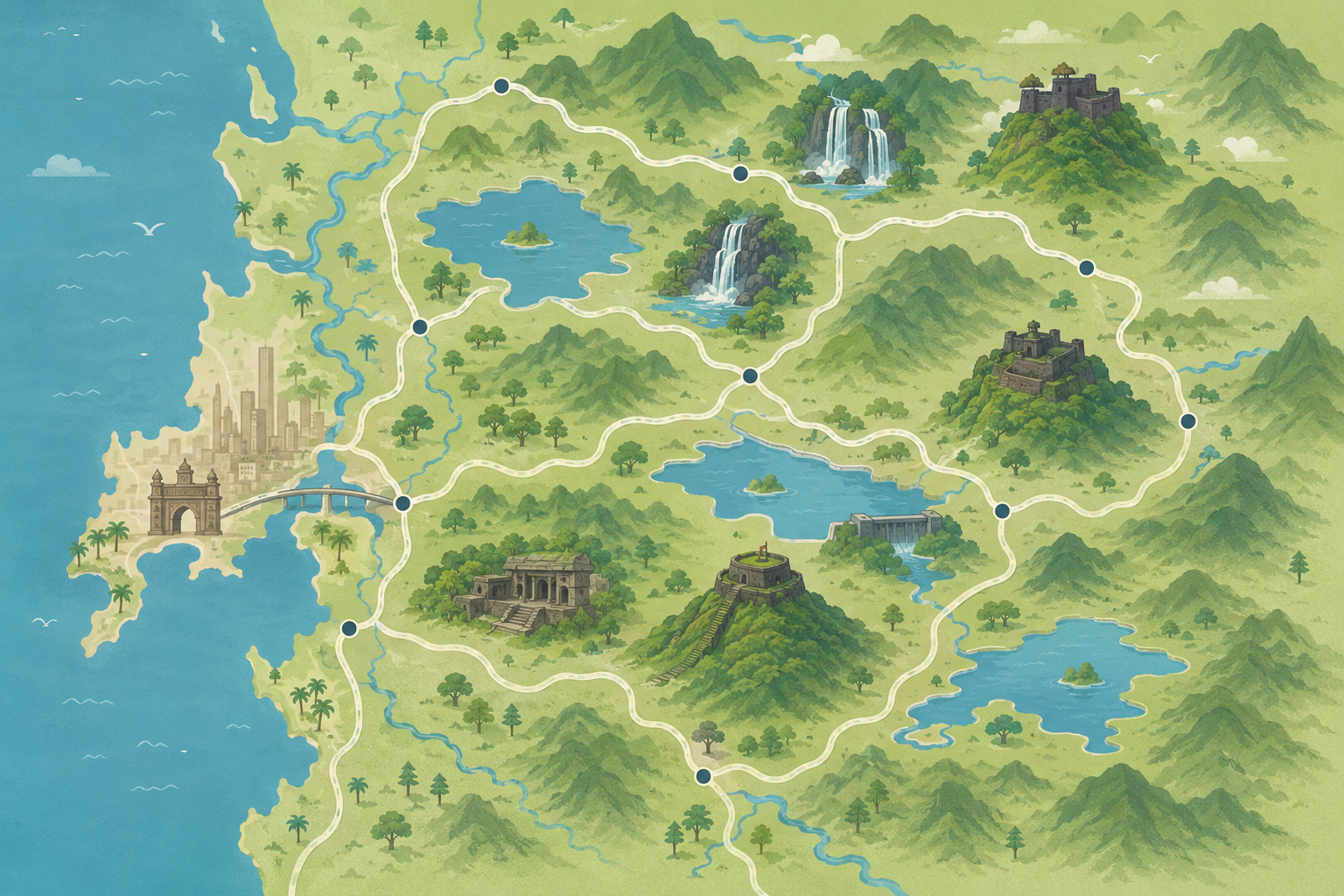
Quick Comparison: Monsoon Places Near Mumbai
| Destination | Distance from Mumbai | Ideal Duration | Budget (per person) | Best For |
|---|---|---|---|---|
| Lonavala & Khandala | 83 km | 1–2 days | ₹2,500–5,000 | Families, first-timers, food lovers |
| Matheran | 100 km | 1–2 days | ₹3,000–6,000 | Couples, no-vehicle escapes |
| Malshej Ghat | 130 km | 1–2 days | ₹2,500–5,000 | Nature lovers, photographers, flamingos |
| Bhandardara | 165 km | 2 days | ₹3,000–6,000 | Peace-seekers, camping, stargazing |
| Igatpuri | 120 km | 1–2 days | ₹2,500–5,000 | Trekkers, meditation retreats |
| Karjat | 70 km | 1 day / overnight | ₹1,500–4,000 | Budget trips, riverside stays |
| Kamshet | 100 km | 1–2 days | ₹3,500–7,000 | Paragliding, adventure seekers |
| Panchgani–Mahabaleshwar | 240 km | 2–3 days | ₹4,000–8,000 | Longer weekend, strawberries, valley views |
Note: These are approximate figures for planning purposes. Prices for stays, food, and activities vary by season and demand — always check current rates before booking.
Why Monsoon Is the Best Time to Visit These Hills
Most people think of the Sahyadris as a winter or summer destination, but honestly, monsoon is when this region truly shows off. Waterfalls like Bhivpuri, Kune, and Dhobi that are barely a trickle in December turn into thundering curtains of water in July and August. The forts that dot this landscape — Lohagad, Rajmachi, Visapur — sit wrapped in cloud, making even a short trek feel like an adventure. And because most tourists still default to winter travel, you’ll often find these places quieter on weekdays, with better rates on stays.
It’s also simply good for the soul. There’s something about sitting on a wet balcony with hot bhajiya and chai, watching rain sweep across a valley, that resets you in a way a beach holiday rarely does.
1. Lonavala & Khandala
Why Visit
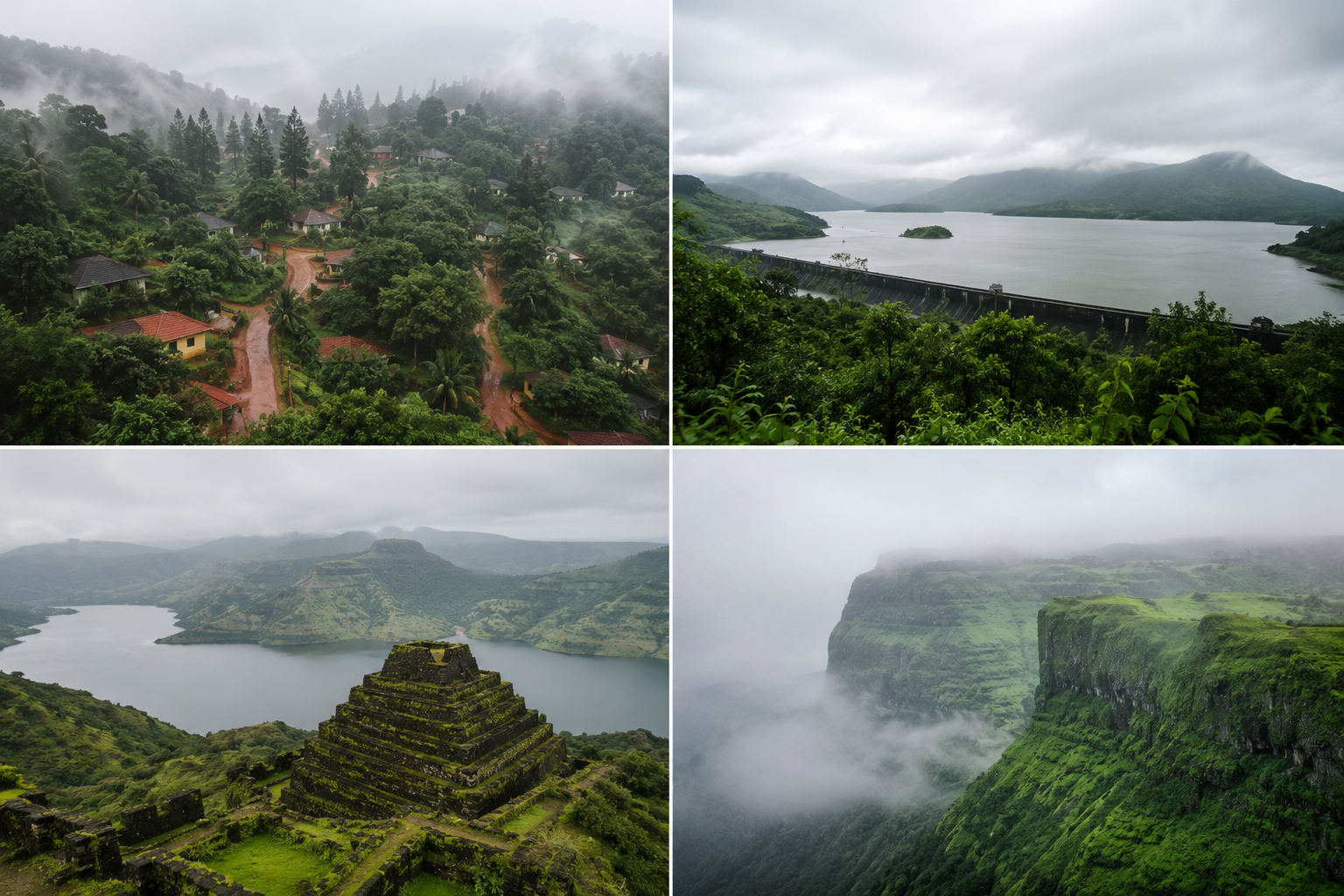
The classic monsoon getaway for Mumbaikars, and for good reason. Lonavala and Khandala sit right on the old Mumbai–Pune highway, surrounded by lakes, waterfalls, and viewpoints that come alive with the first showers. It’s easy to reach, has stays for every budget, and the chikki shops alone are worth the trip.
Quick Information
| Detail | Information |
|---|---|
| Best Time | June to September |
| Ideal Duration | 1–2 days |
| Budget | ₹2,500–5,000 per person |
| Nearest Airport | Pune Airport (65 km) |
| Nearest Railway Station | Lonavala Railway Station |
| Road Connectivity | Mumbai–Pune Expressway (NH48) |
| Best For | Families, couples, first-time monsoon travellers |
| Difficulty Level | Easy |
Top Attractions
Bhushi Dam
- Description: A popular spot where people sit on the overflowing steps as monsoon water gushes over them.
- Time Required: 1–2 hours
- Entry Fee: Nominal parking charge; check current rate on arrival
- Tips: Extremely crowded on weekends; go early morning and avoid standing on slippery rocks in strong currents.
Lohagad Fort
- Description: A relatively easy monsoon trek to a historic fort with sweeping valley views and a famous “Vinchu Kata” (scorpion tail) ridge.
- Time Required: 3–4 hours round trip
- Entry Fee: Free (ASI-protected monument; check for any nominal fee)
- Tips: Carry good grip shoes — the stone steps get slippery in the rain.
Tiger’s Point (Tiger Leap) & Duke’s Nose
- Description: Dramatic cliff-edge viewpoints often shrouded in cloud, offering some of the best panoramic views in the region.
- Time Required: 1 hour
- Entry Fee: Free
- Tips: Visit early morning for a chance to see the valley before the clouds roll in completely.
Rajmachi Point
- Description: A scenic overlook near Khandala, popular for its layered valley views and easy access from the main road.
- Time Required: 30–45 minutes
- Entry Fee: Free
- Tips: A short walk from parking; good for a quick stop even with elderly family members.
Hidden Places
- Kune Falls — a lesser-crowded waterfall near Khandala, best viewed from the designated viewpoint (avoid climbing down, as accidents have been reported here).
- Ryewood Park — a quiet, well-maintained garden in Lonavala town, good for a peaceful morning walk away from the crowds.
Local Experiences
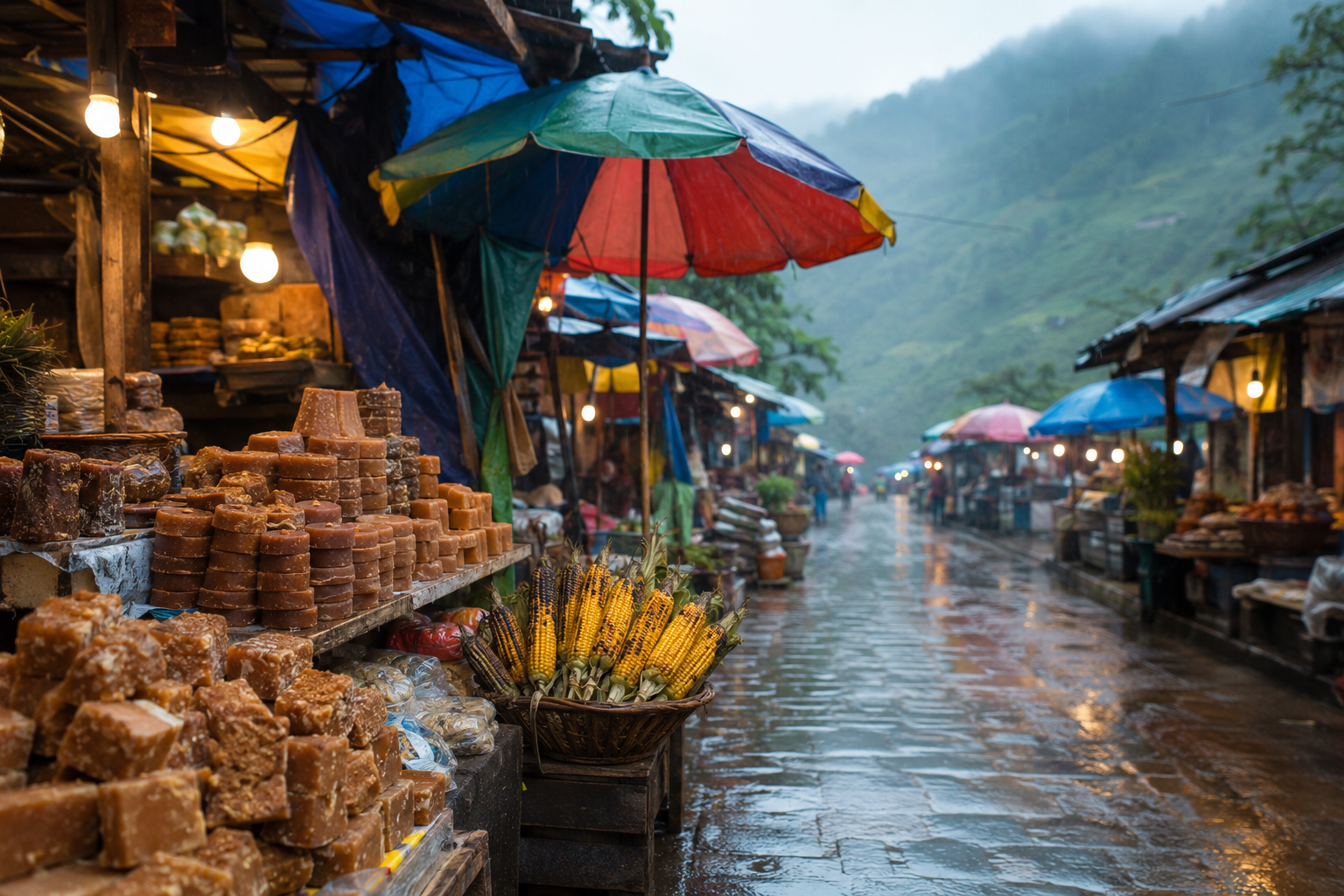
- Markets: Lonavala’s main market street is famous for chikki (jaggery-nut brittle) — try Maganlal Chikki Wala for the original.
- Culture: The area has a strong Maharashtrian small-town charm — old bungalows, colonial-era buildings, and local temples.
- Photography: Misty roads on the expressway and the valley views from Duke’s Nose are made for wide-angle shots.
- Sunrise: Tiger’s Point offers a good sunrise view on clearer monsoon mornings.
- Sunset: Rajmachi Point and Lion’s Point are popular sunset spots.
- Festivals: If your trip coincides with Ganesh Chaturthi (August–September), you’ll see wonderful local processions in Lonavala town.
Food Guide
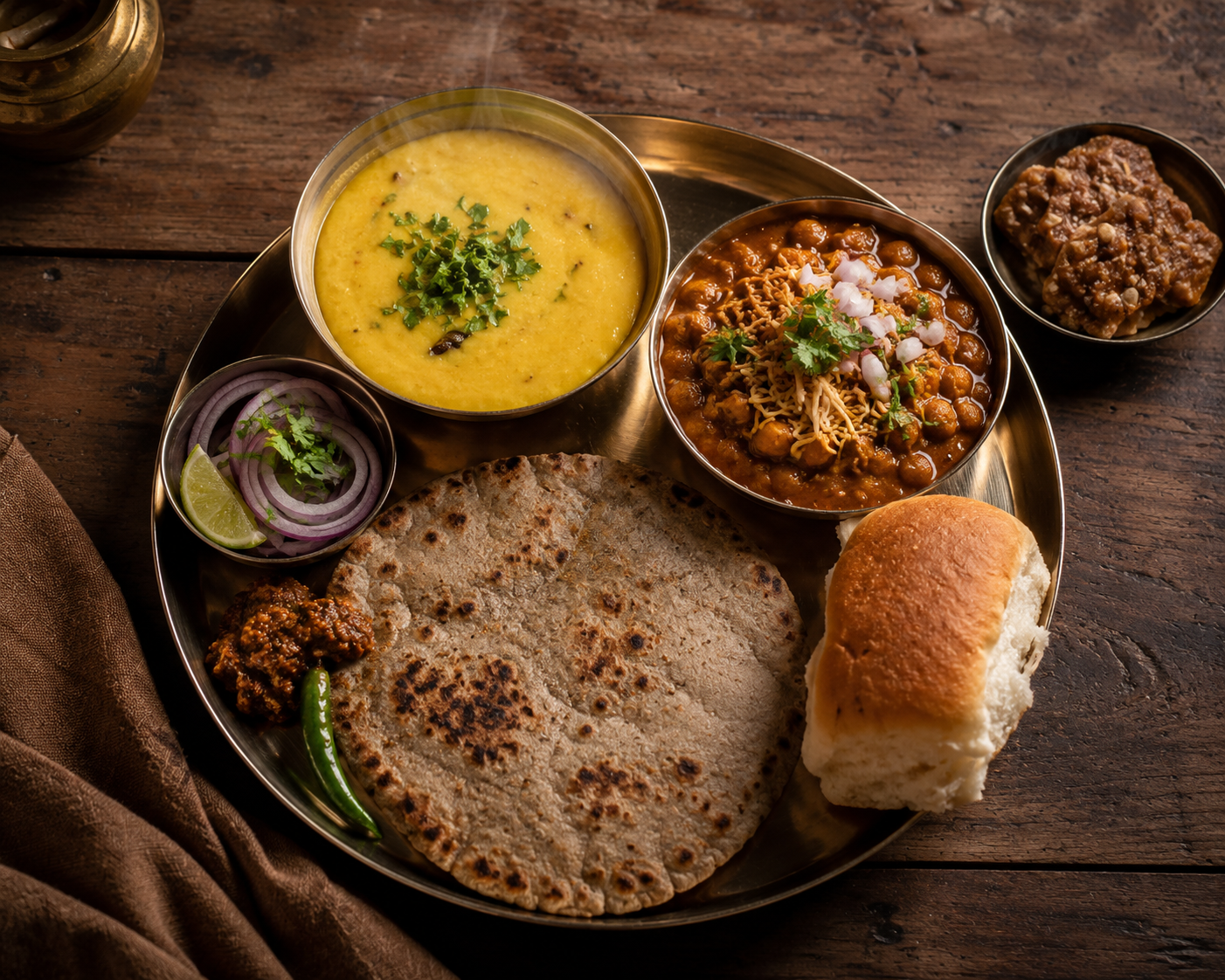
- Must-try dishes: Vada pav, misal pav, and the famous Lonavala chikki in flavours like til, dry fruit, and chocolate.
- Street food: Corn on the cob (bhutta) roasted on coal, sold along the ghat road — a monsoon staple.
- Restaurants: Look for local Maharashtrian thali places for an authentic, budget-friendly meal.
- Cafes: Several new-age cafes have opened along the Lonavala–Khandala stretch with valley-facing seating.
- Desserts: Chikki, fudge, and the local variant of jamun (fresh jamun fruit is sold roadside in July–August).
- Budget: ₹300–800 per person for meals across the day.
- Veg/Non-Veg: Both widely available; vegetarian options dominate street food.
Adventure Activities
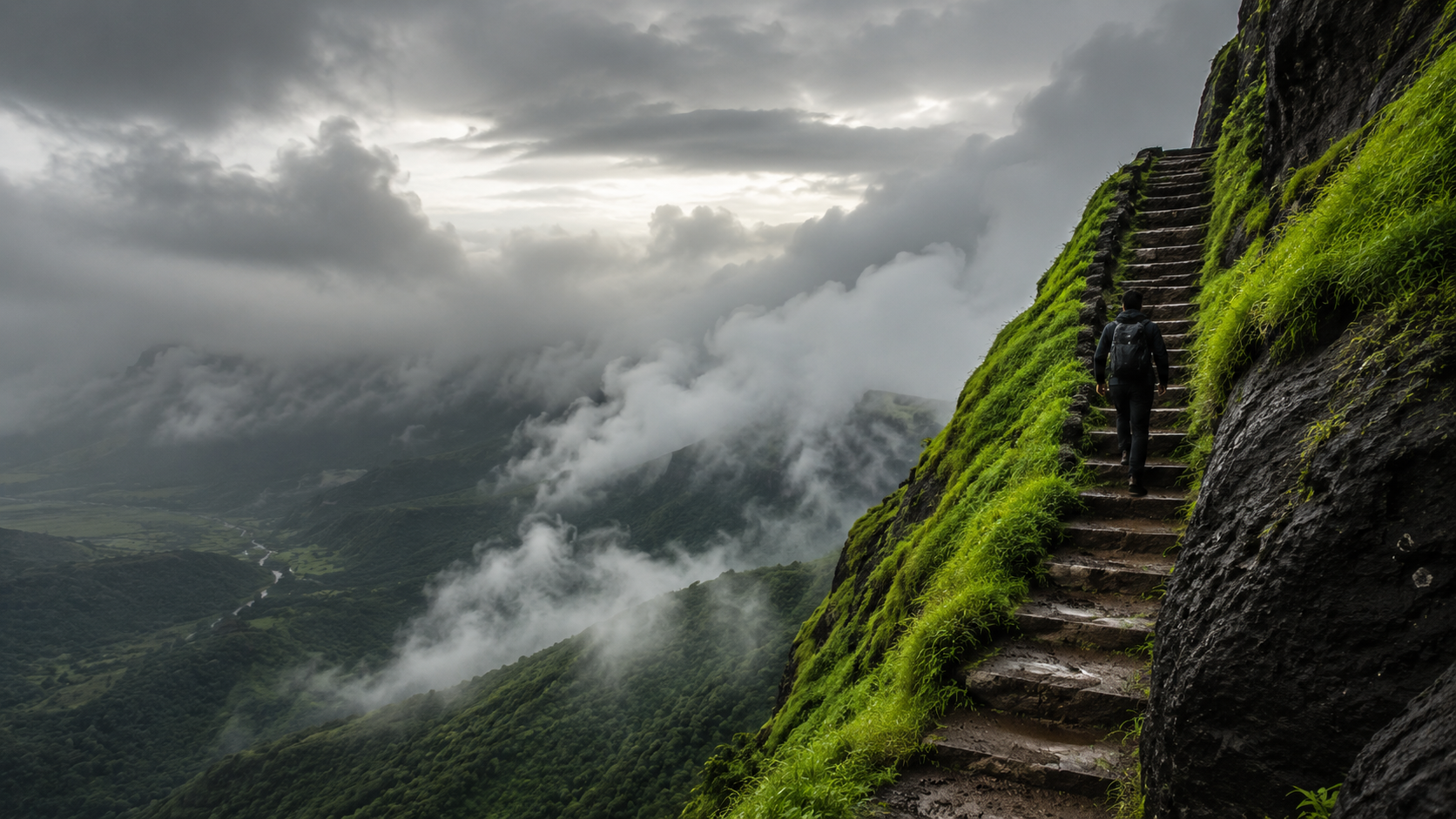
- Trekking to Lohagad/Visapur: Price range: Free to ₹500 (if hiring a local guide); Best season: Monsoon for greenery, but be cautious of slippery rocks; Difficulty: Moderate; Safety tip: Avoid trekking during heavy rain warnings or lightning.
- Zip-lining/Adventure parks: Several private adventure parks near Lonavala offer zip-lining and rappelling; Price range: ₹300–1,500 depending on activity; Best season: Year-round, weather permitting; Difficulty: Easy to Moderate; Safety tip: Choose operators with visible safety certification and gear checks.
Where to Stay
- Budget: Simple lodges and homestays near Lonavala station, ₹1,200–2,500/night.
- Mid-range: Resort-style hotels with pools, ₹3,500–6,000/night.
- Luxury: Premium hillside resorts with valley views, ₹8,000+/night.
- Hostels: A few backpacker hostels exist closer to Lonavala town.
- Camping: Organised riverside/hillside camping options are available near Kamshet (see below) if you want a more rustic stay.
2. Matheran
Why Visit
Matheran is India’s only automobile-free hill station, and that alone makes it worth the trip. No cars, no bikes — just walking trails, horses, and hand-pulled toy trains. In the monsoon, the red laterite paths turn slushy but the forest cover turns a deep, saturated green that’s hard to find elsewhere so close to Mumbai.
Quick Information
| Detail | Information |
|---|---|
| Best Time | June to September (some viewpoints close in peak monsoon for safety) |
| Ideal Duration | 1–2 days |
| Budget | ₹3,000–6,000 per person |
| Nearest Airport | Mumbai (CSMIA), approx. 100 km |
| Nearest Railway Station | Neral Railway Station (then toy train or shared taxi to Matheran) |
| Road Connectivity | Vehicles stop at Dasturi Naka; rest of the journey on foot, horse, or hand-cart |
| Best For | Couples, peaceful family trips, digital detox seekers |
| Difficulty Level | Easy (walking required as it’s vehicle-free) |
Top Attractions
Charlotte Lake
- Description: The main water source for Matheran, surrounded by dense forest — beautiful in the rains, though it may overflow.
- Time Required: 30–45 minutes
- Entry Fee: Free
- Tips: Some points near the lake get dangerously slippery; stay on marked paths.
Panorama Point & Louisa Point
- Description: Popular viewpoints for valley and Sahyadri range views, often clouded over during monsoon.
- Time Required: 1 hour each
- Entry Fee: Free
- Tips: Many viewpoints are officially barricaded during heavy monsoon months for safety — always check locally before heading out.
Matheran Toy Train
- Description: A narrow-gauge heritage train that chugs from Neral to Matheran through forested hills.
- Time Required: Approx. 2 hours one-way
- Entry Fee: Ticket prices vary by class; check current fares before travel, as services sometimes get suspended during heavy rain.
- Tips: Book in advance during weekends; the service is sometimes replaced by shared taxis if tracks are affected by rain.
Hidden Places
- One Tree Hill Point — quieter than the more famous points, good for a peaceful walk.
- Little Chowk Point — less commercial, with fewer horse-and-guide touts.
Local Experiences
- Markets: The main market sells Matheran’s famous chikki and honey, along with leather items and canes.
- Culture: The old British-era bungalows and the toy train reflect the hill station’s colonial past.
- Photography: Misty forest paths and red mud trails make for striking, moody shots.
- Sunrise: Panorama Point on a clear morning.
- Sunset: Porcupine Point (Sunset Point) is the local favourite, though views depend on cloud cover.
- Festivals: Quieter than other hill stations; local temple festivals happen through the year.
Food Guide
- Must-try dishes: Matheran’s signature chikki and honey, along with simple Maharashtrian home-style meals at local eateries.
- Street food: Corn, kanda bhajiya, and roasted peanuts sold near the market.
- Restaurants: Small family-run restaurants dominate; don’t expect fine dining here — that’s part of the charm.
- Cafes: A handful of cosy cafes near the main market serve tea and snacks with garden seating.
- Desserts: Chikki in various flavours, and honey-based sweets.
- Budget: ₹400–900 per person per day for food.
- Veg/Non-Veg: Mostly vegetarian eateries; limited non-veg options.
Adventure Activities
- Horse riding: Available near Dasturi Naka to explore the town; Price range: Varies by distance, negotiate and confirm before starting; Best season: Avoid in very heavy rain as paths get slippery for horses; Difficulty: Easy; Safety tip: Choose well-maintained, healthy-looking horses and avoid overloading.
- Forest walking trails: Free, self-guided; Best season: Monsoon for greenery, but carry a walking stick for grip; Difficulty: Easy to Moderate; Safety tip: Stick to marked paths, as several points get dangerously slippery near cliff edges.
Where to Stay
- Budget: Simple guesthouses near the market, ₹1,500–3,000/night.
- Mid-range: Heritage-style hotels and resorts, ₹4,000–7,000/night.
- Luxury: A few colonial-era heritage properties offer premium stays.
- Hostels: Limited options; mostly guesthouses.
- Camping: Not commonly available within Matheran itself due to forest protection rules.
3. Malshej Ghat
Why Visit
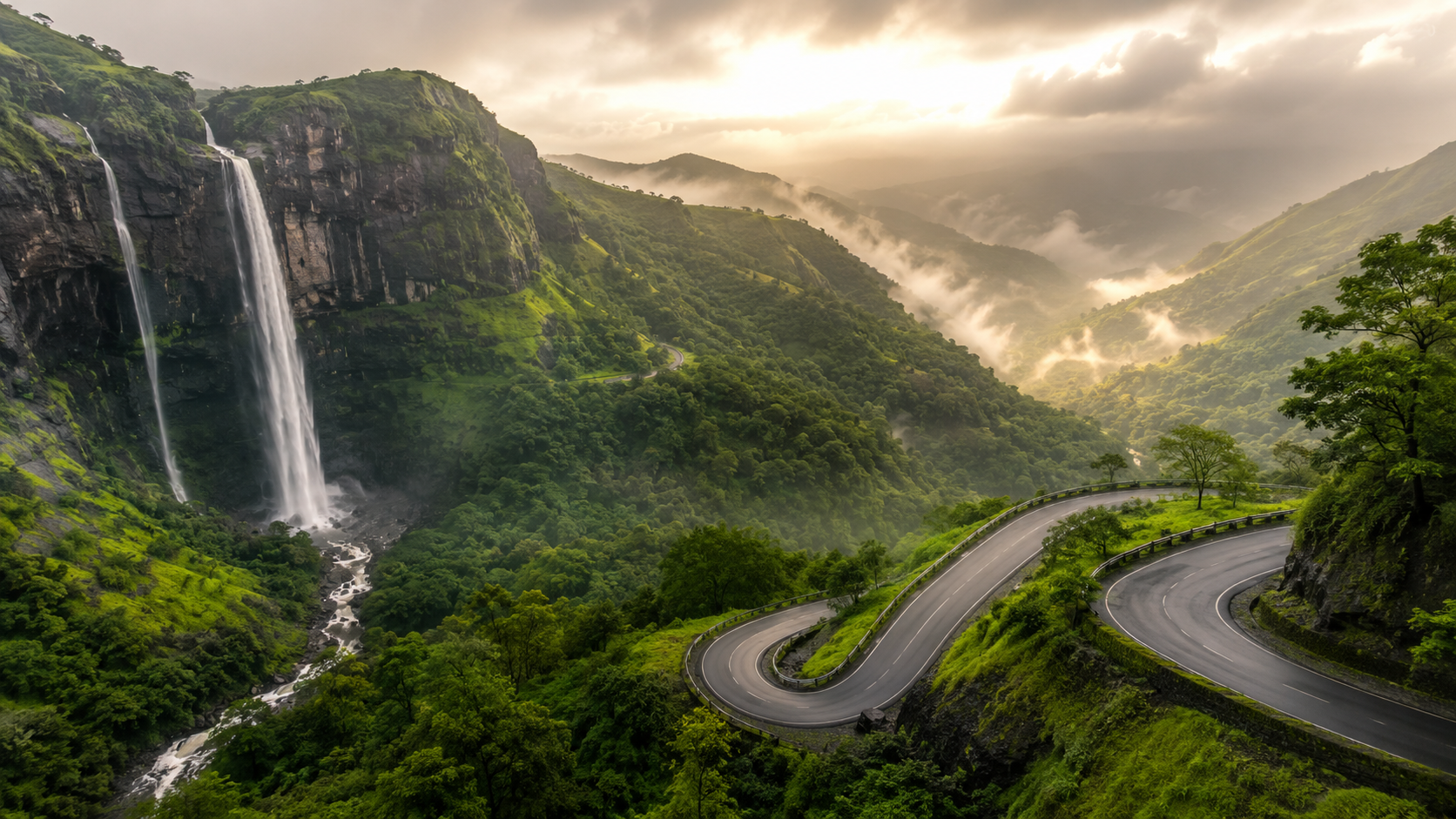
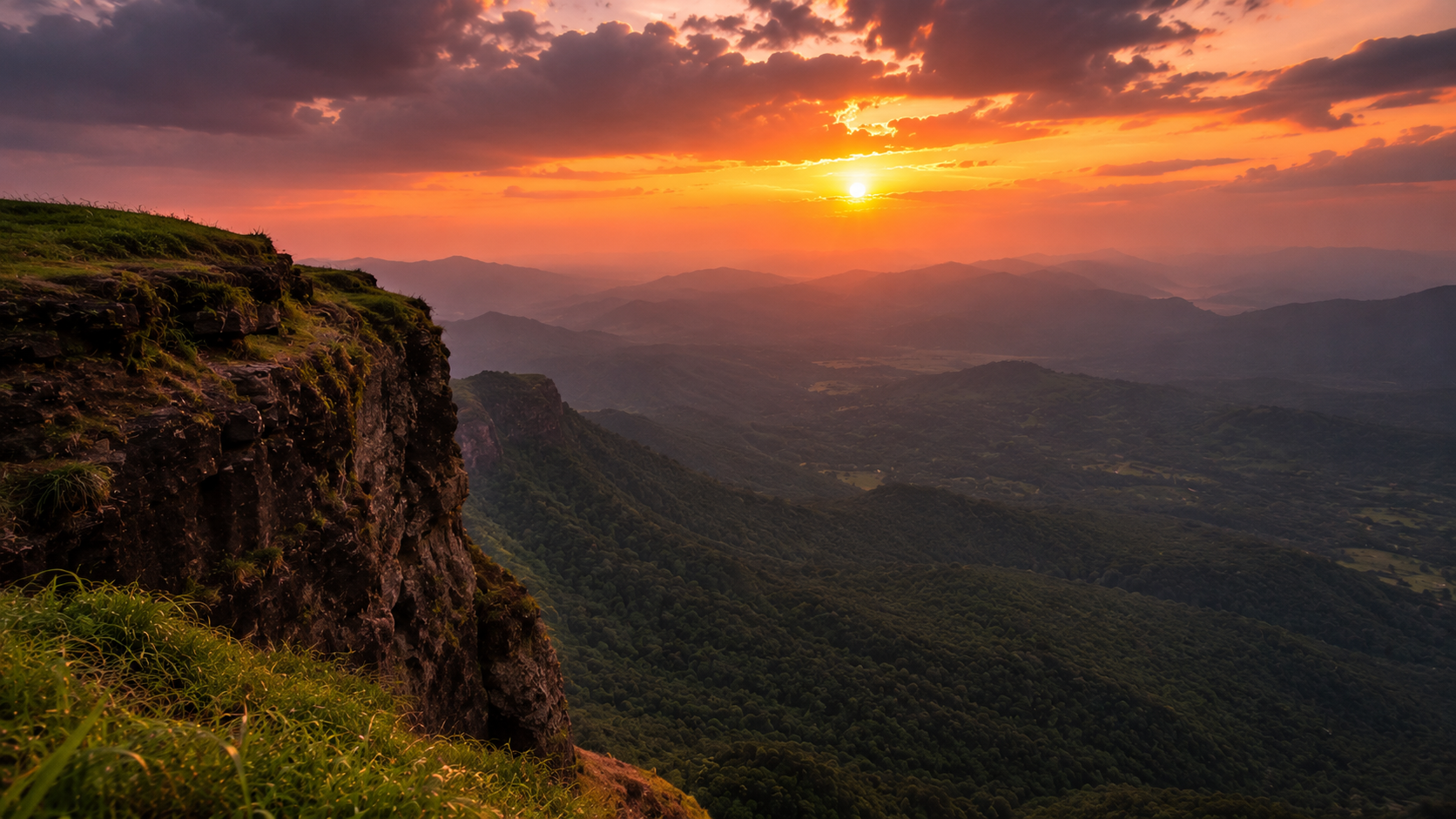
If you want drama — think waterfalls crashing down cliff faces right next to the road, clouds rolling through car windows, and (in a good rainfall year) flocks of flamingos at the nearby Pimpalgaon Joga backwaters — Malshej Ghat delivers. It’s less commercialised than Lonavala, which means it still feels wild.
Quick Information
| Detail | Information |
|---|---|
| Best Time | July to September |
| Ideal Duration | 1–2 days |
| Budget | ₹2,500–5,000 per person |
| Nearest Airport | Mumbai / Pune (both approx. 130 km) |
| Nearest Railway Station | Kalyan Railway Station (approx. 65 km from the ghat) |
| Road Connectivity | Well connected via Kalyan–Ahmednagar highway |
| Best For | Photographers, nature lovers, road trippers |
| Difficulty Level | Easy to Moderate (some trek points) |
Top Attractions
Malshej Ghat Waterfalls & Viewpoints
- Description: Multiple roadside waterfalls and viewpoints along the ghat road, especially stunning during heavy rain.
- Time Required: A few hours to explore the full stretch
- Entry Fee: Free
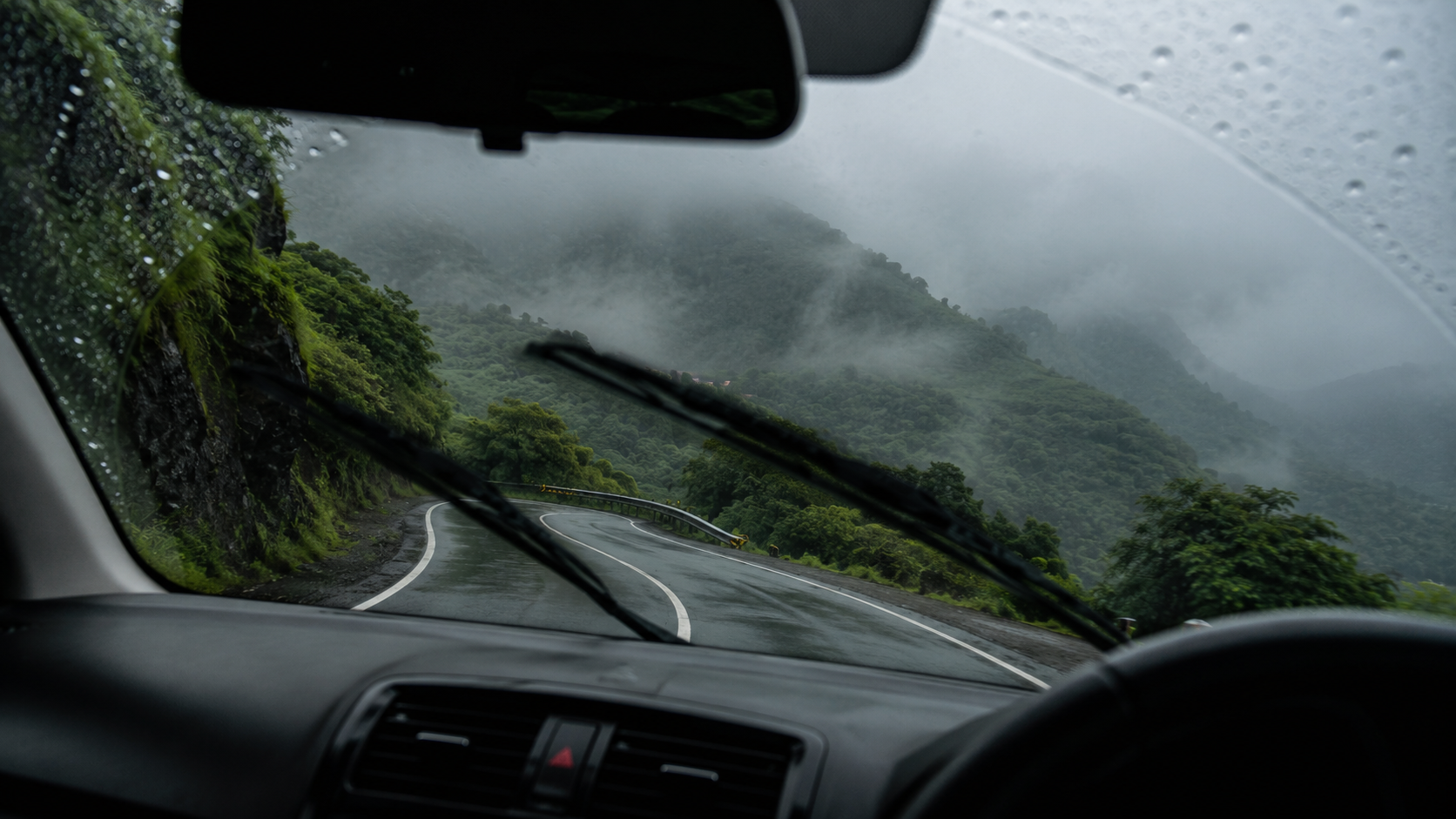
- Tips: Roads can be foggy and slippery — drive slowly and avoid stopping on blind curves.
Harishchandragad Fort
- Description: A challenging but rewarding trek to an ancient fort famous for the Konkan Kada cliff and Kedareshwar Cave.
- Time Required: Full day (often an overnight trek)
- Entry Fee: Free
- Tips: This is for experienced trekkers only during monsoon — the trails get extremely slippery and visibility drops in fog.
Pimpalgaon Joga Dam (Flamingo Point)
- Description: In good monsoon years, migratory flamingos are spotted here, drawing birdwatchers and photographers.
- Time Required: 1–2 hours
- Entry Fee: Free
- Tips: Flamingo sightings aren’t guaranteed every year — check recent local reports before planning around this specifically.
Hidden Places
- Ajoba Fort — a quieter trekking trail near Malshej, less crowded than Harishchandragad.
- Shirpunje village viewpoint — a local, lesser-known spot for panoramic valley views away from the main tourist stretch.
Local Experiences
- Markets: Small roadside stalls sell local honey, corn, and seasonal fruit rather than a formal market.
- Culture: The route passes through small Adivasi (tribal) villages — a good place to see rural Maharashtra away from tourist crowds.
- Photography: This is arguably the most photogenic monsoon drive near Mumbai — waterfalls, fog, and green valleys in one frame.
- Sunrise: Early morning light through the mist on the ghat road is spectacular but weather-dependent.
- Sunset: Viewpoints along the ghat offer good sunset views on clearer evenings.
- Festivals: Local tribal festivals happen seasonally; ask locally if you’re interested in experiencing one respectfully.
Food Guide
- Must-try dishes: Simple Maharashtrian thali at roadside dhabas — pithla-bhakri is a local favourite.
- Street food: Hot corn and bhajiya from roadside stalls along the ghat.
- Restaurants: Limited formal restaurants; dhabas are the main option.
- Cafes: A few small tea stalls with valley views have become popular photo stops.
- Desserts: Local jaggery-based sweets sold by roadside vendors.
- Budget: ₹300–700 per person for meals.
- Veg/Non-Veg: Predominantly vegetarian along this route.
Adventure Activities
- Trekking (Harishchandragad/Ajoba): Price range: Free (guide fees extra, if hired); Best season: Early monsoon for greenery, but check weather warnings; Difficulty: Moderate to Difficult; Safety tip: Avoid trekking alone; go with an experienced group or local guide, and never attempt Konkan Kada in low visibility.
- Birdwatching: Free; Best season: Peak monsoon (July–September) for possible flamingo sightings; Difficulty: Easy; Safety tip: Maintain a respectful distance from wildlife and stay off private farmland.
Where to Stay
- Budget: MTDC (Maharashtra Tourism) resort and a few local lodges.
- Mid-range: Private resorts along the ghat road, ₹3,500–6,000/night.
- Luxury: Limited high-end options; this route is better known for day trips and mid-range stays.
- Hostels: Not commonly available here.
- Camping: A few operators run monsoon camping experiences near the ghat — check current safety permissions before booking.
4. Bhandardara
Why Visit
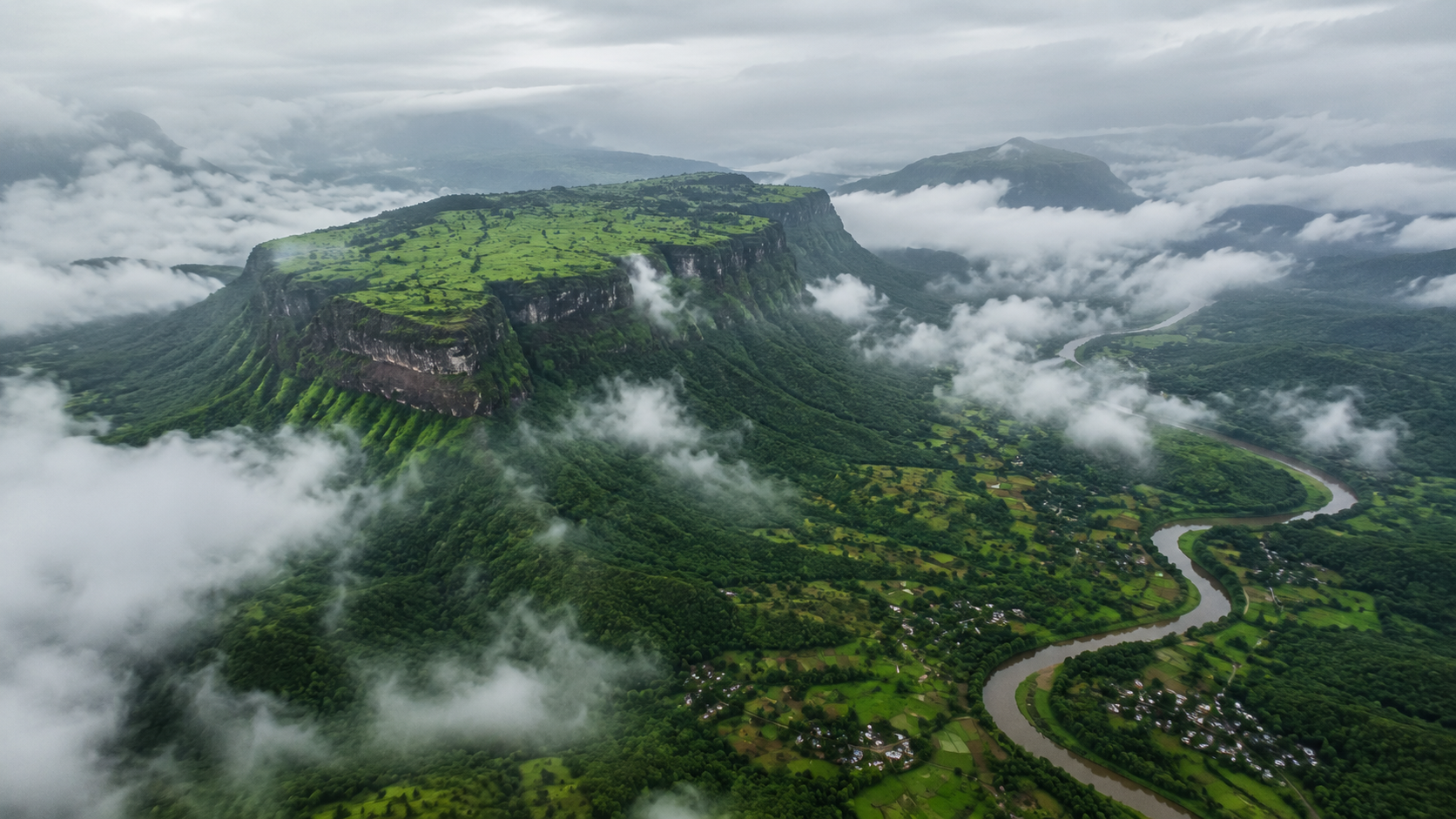
Bhandardara is the quiet cousin of Lonavala — fewer crowds, more silence, and genuinely starry night skies once the clouds part. The Arthur Lake (Wilson Dam backwaters) and the Randha and Umbrella Falls make this one of the most peaceful monsoon escapes near Mumbai.
Quick Information
| Detail | Information |
|---|---|
| Best Time | July to September |
| Ideal Duration | 2 days |
| Budget | ₹3,000–6,000 per person |
| Nearest Airport | Mumbai / Pune (approx. 165 km / 145 km) |
| Nearest Railway Station | Igatpuri Railway Station (approx. 65 km) |
| Road Connectivity | Accessible via Igatpuri–Ghoti route |
| Best For | Peace-seekers, campers, stargazers, couples |
| Difficulty Level | Easy |
Top Attractions
Wilson Dam & Arthur Lake
- Description: A colonial-era dam with the lake behind it turning a stunning green-blue in the monsoon, framed by hills.
- Time Required: 1–2 hours
- Entry Fee: Free (boating charges apply separately)
- Tips: Water levels and dam discharge can be unpredictable in heavy rain — follow local safety instructions near the dam.
Umbrella Falls
- Description: A wide waterfall that spreads out like an umbrella when the reservoir is full, best seen when the dam releases water.
- Time Required: 1 hour
- Entry Fee: Free
- Tips: Only accessible when water is released — timings vary, so ask locally on the day.
Randha Falls
- Description: A dramatic, high waterfall visible from a safe viewing platform, especially powerful in peak monsoon.
- Time Required: 30–45 minutes
- Entry Fee: Free
- Tips: Viewing is from a distance for safety — don’t attempt to climb down.
Kalsubai Peak
- Description: Maharashtra’s highest peak, a popular (if strenuous) trekking destination near Bhandardara.
- Time Required: Full day
- Entry Fee: Free (local village entry/parking fees may apply)
- Tips: Extremely slippery in monsoon — recommended for fit, experienced trekkers with proper shoes and rain gear.
Hidden Places
- Ratanwadi village and Amruteshwar Temple — a quiet ancient Hemadpanthi-style temple near the base of Ratangad fort, rarely crowded.
- Mount Kalsubai base villages — good for experiencing genuine rural Maharashtra life.
Local Experiences
- Markets: No major markets; small local stalls sell seasonal produce and snacks.
- Culture: Traditional farming villages surround the lake — a good spot for slow travel and genuine local interaction.
- Photography: Arthur Lake at sunrise with mist over the water is a favourite among photographers.
- Sunrise: Lakeside points near Bhandardara village.
- Sunset: Wilson Dam viewpoint.
- Festivals: Local harvest-related festivals happen in nearby villages; timing varies yearly.
Food Guide
- Must-try dishes: Home-style Maharashtrian thalis served at local homestays — often the most memorable meals of the trip.
- Street food: Limited; a few stalls near the dam sell corn and tea.
- Restaurants: Very few formal restaurants — most stays include home-cooked meals.
- Cafes: Minimal; this is a rustic destination by design.
- Desserts: Simple jaggery-based sweets, if available locally.
- Budget: ₹400–900 per person for meals (often bundled with homestay packages).
- Veg/Non-Veg: Mostly vegetarian; confirm with your homestay in advance if you need non-veg.
Adventure Activities
- Kalsubai trek: Price range: Free (local fees may apply); Best season: Early monsoon for lush trails, but avoid peak heavy rain days; Difficulty: Difficult; Safety tip: Start early, carry sufficient water, and avoid the summit in lightning or heavy fog.
- Boating on Arthur Lake: Price range: Nominal, confirm current rates locally; Best season: Post-monsoon for calmer waters; Difficulty: Easy; Safety tip: Use only registered boat operators with life jackets provided.
- Stargazing/camping: Price range: Varies by operator; Best season: Just after monsoon (September–October) for clearer skies; Difficulty: Easy; Safety tip: Camp only in designated, permitted areas.
Where to Stay
- Budget: Local homestays, ₹1,500–2,500/night (often including meals).
- Mid-range: Private resorts near the lake, ₹4,000–6,500/night.
- Luxury: Limited high-end options; this is primarily a rustic getaway.
- Hostels: Not common here.
- Camping: Popular and well-suited to Bhandardara — several operators offer lakeside or riverside camping.
5. Igatpuri
Why Visit
Igatpuri combines two very different kinds of monsoon escape: adrenaline-pumping treks up Kalsubai and Harihar forts, and complete stillness at its famous Vipassana meditation centre. Add the Tringalwadi and Vaitarna backwaters, and you’ve got a destination that suits both restless trekkers and travellers craving quiet.
Quick Information
| Detail | Information |
|---|---|
| Best Time | June to September |
| Ideal Duration | 1–2 days |
| Budget | ₹2,500–5,000 per person |
| Nearest Airport | Mumbai / Nashik (approx. 120 km / 45 km) |
| Nearest Railway Station | Igatpuri Railway Station (on the Mumbai–Nashik line) |
| Road Connectivity | Well connected via NH160 / old Mumbai–Nashik highway |
| Best For | Trekkers, meditation retreat seekers, backpackers |
| Difficulty Level | Easy to Difficult (varies by activity) |
Top Attractions
Harihar Fort
- Description: Famous for its near-vertical rock-cut staircase, this fort trek is one of the most photographed in Maharashtra.
- Time Required: Half day
- Entry Fee: Free
- Tips: The stone steps become dangerously slippery in the rain — this is strictly for experienced trekkers with proper footwear.
Tringalwadi Fort & Lake
- Description: A moderate trek with a beautiful lake at the base, ideal for those wanting scenery without the extreme difficulty of Harihar.
- Time Required: Half day
- Entry Fee: Free
- Tips: Good for beginner-to-intermediate trekkers looking for a monsoon trek near Mumbai.
Vipassana International Academy (Dhamma Giri)
- Description: One of the world’s largest meditation centres, offering 10-day silent meditation courses.
- Time Required: 10 days for a full course (short visits also possible)
- Entry Fee: Courses are run on a donation basis; check current registration process on the official website before planning.
- Tips: Advance booking required for courses; casual sightseeing inside is limited out of respect for participants.
Hidden Places
- Camel Valley — a lesser-known viewpoint with unusual rock formations, quieter than the main trekking spots.
- Vaitarna Backwaters — peaceful and largely undiscovered by mainstream tourists.
Local Experiences
- Markets: Small local markets near Igatpuri station sell regional produce and snacks.
- Culture: A blend of trekking culture and spiritual tourism thanks to the Vipassana centre.
- Photography: Harihar’s staircase and the misty valleys around Tringalwadi are top photography spots.
- Sunrise: Camel Valley on a clear morning.
- Sunset: Tringalwadi lake area.
- Festivals: Local harvest festivals in surrounding villages; timing varies.
Food Guide
- Must-try dishes: Local Maharashtrian thalis, and Nashik-style misal pav given the proximity to Nashik.
- Street food: Corn, bhajiya, and tea stalls near the station and trek bases.
- Restaurants: Simple local eateries; nothing fancy but reliably good.
- Cafes: Limited, mostly basic tea stalls.
- Desserts: Local sweets available in small shops near the town.
- Budget: ₹300–700 per person for meals.
- Veg/Non-Veg: Mostly vegetarian.
Adventure Activities
- Harihar Fort trek: Price range: Free; Best season: Early monsoon for green trails, but check conditions closely; Difficulty: Difficult; Safety tip: Do not attempt this trek in wet conditions without proper trekking shoes and an experienced guide.
- Tringalwadi trek: Price range: Free; Best season: Monsoon; Difficulty: Moderate; Safety tip: Carry a walking stick and avoid the trail during active heavy rainfall.
Where to Stay
- Budget: Simple guesthouses near Igatpuri town, ₹1,200–2,500/night.
- Mid-range: Resorts near Tringalwadi and the Vaitarna backwaters, ₹3,500–6,000/night.
- Luxury: A few premium eco-resorts in the area.
- Hostels: Limited but growing backpacker options given the trekking popularity.
- Camping: Available near Tringalwadi lake through local operators.
6. Karjat
Why Visit
Karjat is the go-to for a quick, budget-friendly monsoon escape — think riverside resorts, easy waterfall visits, and forts you can climb in half a day. It’s especially popular with groups of friends and young travellers looking for a low-effort, high-fun weekend.
Quick Information
| Detail | Information |
|---|---|
| Best Time | June to September |
| Ideal Duration | 1 day / overnight |
| Budget | ₹1,500–4,000 per person |
| Nearest Airport | Mumbai (approx. 70 km) |
| Nearest Railway Station | Karjat Railway Station (on the Mumbai suburban line) |
| Road Connectivity | Easily accessible via NH48 and local roads |
| Best For | Budget travellers, groups, weekend picnics |
| Difficulty Level | Easy |
Top Attractions
Kondana Caves
- Description: Ancient Buddhist rock-cut caves set amid green hills, quieter than more famous cave sites near Mumbai.
- Time Required: 2–3 hours
- Entry Fee: Nominal ASI fee; check current rates
- Tips: The path can get muddy; wear shoes with good grip.
Kondeshwar Temple & Waterfall
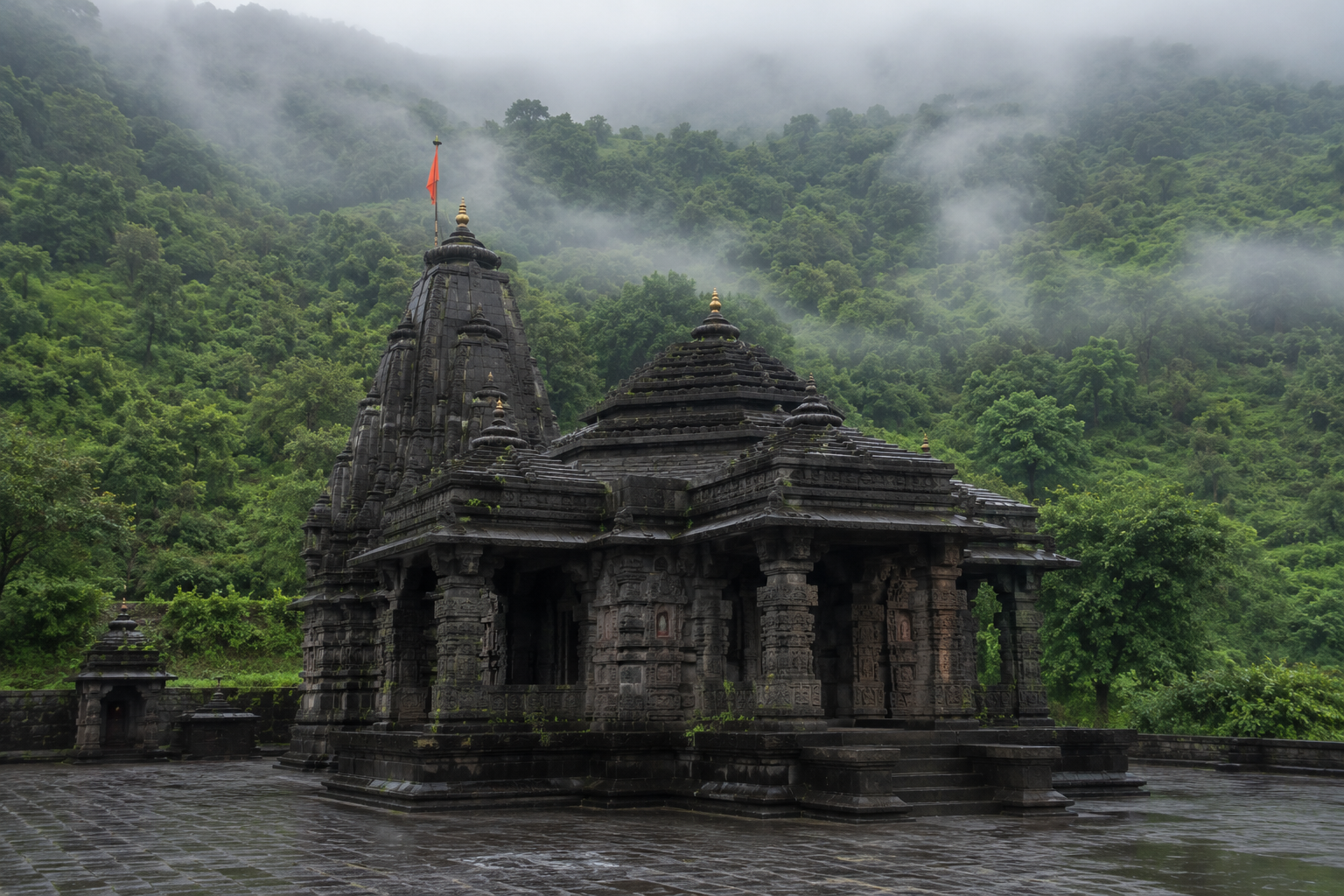
- Description: An old temple set beside a seasonal waterfall that flows strongly during monsoon.
- Time Required: 1–2 hours
- Entry Fee: Free
- Tips: Popular with families; can get crowded on weekends.
Peb Fort (Vikatgad)
- Description: A moderate trek offering good valley views and a genuine sense of adventure without being too strenuous.
- Time Required: Half day
- Entry Fee: Free
- Tips: Slippery rocks near the top — good grip footwear is essential.
Hidden Places
- Bhivpuri Falls — a powerful waterfall near Karjat, less commercialised than the ones in Lonavala.
- Ulhas Valley viewpoints near Kashele — largely known only to local riverside resort guests.
Local Experiences
- Markets: Small local produce markets rather than tourist bazaars.
- Culture: Riverside village life along the Ulhas River — a relaxed, rural feel just an hour from Mumbai.
- Photography: Riverside resorts and waterfall backdrops are popular for casual photography.
- Sunrise: River viewpoints near Kashele.
- Sunset: Peb Fort base area on clear evenings.
- Festivals: Local temple festivals at Kondeshwar happen periodically through the year.
Food Guide
- Must-try dishes: River-resort barbecues and Maharashtrian thalis are common as part of day-outing packages.
- Street food: Corn and bhajiya stalls near waterfall access points.
- Restaurants: Riverside resorts often double as the main dining option here.
- Cafes: Limited standalone cafes; most food is tied to resort stays.
- Desserts: Simple, resort-served desserts; nothing region-specific to note.
- Budget: ₹500–1,200 per person, often bundled into resort day-packages.
- Veg/Non-Veg: Both available at most resorts.
Adventure Activities
- River rafting/riverside activities (seasonal): Price range: Varies significantly by operator and season; Best season: Confirm with operator, as river conditions change quickly in monsoon; Difficulty: Easy to Moderate; Safety tip: Only choose operators with certified guides and life jackets — river currents can be unpredictable and dangerous in heavy rain.
- Peb Fort trekking: Price range: Free; Best season: Monsoon; Difficulty: Moderate; Safety tip: Avoid trekking during active rainfall due to slippery rock sections.
Where to Stay
- Budget: Simple lodges near Karjat station, ₹1,000–2,000/night.
- Mid-range: Riverside resorts with day-outing packages, ₹2,500–5,000/night.
- Luxury: A few premium riverside resorts with pools and activity packages.
- Hostels: Limited but present given proximity to Mumbai.
- Camping: Riverside camping is available through several local operators.
7. Kamshet
Why Visit
Kamshet has quietly become one of India’s best paragliding destinations, and the monsoon backdrop of green valleys and lakes makes it even more dramatic — though note that paragliding itself typically pauses during peak monsoon and resumes post-rains. It’s also home to some of the region’s most scenic lakeside camping spots.
Quick Information
| Detail | Information |
|---|---|
| Best Time | June–July for scenery; September onward for paragliding resumption — confirm seasonal activity calendars |
| Ideal Duration | 1–2 days |
| Budget | ₹3,500–7,000 per person |
| Nearest Airport | Pune Airport (approx. 55 km) |
| Nearest Railway Station | Kamshet Railway Station |
| Road Connectivity | Located on the old Mumbai–Pune highway |
| Best For | Adventure seekers, campers, couples |
| Difficulty Level | Easy to Moderate |
Top Attractions
Pawna Lake
- Description: A picturesque lake surrounded by hills, famous for its lakeside camping scene.
- Time Required: Half day to full day
- Entry Fee: Free (camping fees apply separately)
- Tips: Choose registered, permitted campsites only — unregulated camping has led to safety issues in the past.
Tikona Fort
- Description: A pyramid-shaped fort offering a moderately challenging trek with excellent views over Pawna Lake.
- Time Required: Half day
- Entry Fee: Free
- Tips: Trail gets slippery in the rain; sturdy shoes recommended.
Bhaja & Karla Caves
- Description: Ancient Buddhist rock-cut caves near Kamshet, historically significant and visually striking.
- Time Required: 2–3 hours for both
- Entry Fee: Nominal ASI entry fee; check current rates
- Tips: Karla Caves involve some uphill walking — carry water and wear comfortable shoes.
Hidden Places
- Kondana Caves route — an offbeat combination trip when visiting from the Kamshet side.
- Small local villages around Pawna Lake — good for a quieter, less touristy lakeside experience.
Local Experiences
- Markets: No major markets; small local shops near the highway.
- Culture: A growing paragliding and adventure-sports culture blended with traditional Maval region village life.
- Photography: Pawna Lake at sunrise and the view from Tikona Fort are the standout shots here.
- Sunrise: Pawna Lake camping sites.
- Sunset: Tikona Fort base or lakeside points.
- Festivals: Local village festivals happen seasonally; ask campsite hosts for current dates.
Food Guide
- Must-try dishes: Home-style Maharashtrian meals provided by campsite hosts, often cooked fresh over a bonfire setup.
- Street food: Limited; most food here is tied to camping packages.
- Restaurants: Sparse; plan meals through your campsite or carry your own supplies.
- Cafes: A few small cafes have opened along the highway.
- Desserts: Simple, camp-style desserts if included in your package.
- Budget: ₹600–1,500 per person, usually bundled with camping packages.
- Veg/Non-Veg: Both usually available; confirm with your campsite in advance.
Adventure Activities
- Paragliding: Price range: Varies by operator and flight duration — confirm current rates directly, as this activity is weather-dependent and often paused during heavy monsoon; Best season: Post-monsoon (October onward) for consistent flying conditions; Difficulty: Easy (tandem flights); Safety tip: Fly only with DGCA/APPI-certified operators and check weather clearance on the day.
- Lakeside camping: Price range: Varies by package; Best season: Monsoon for scenery, though confirm site safety given water levels; Difficulty: Easy; Safety tip: Book only permitted, registered campsites — avoid random unregistered setups along the lake edge.
Where to Stay
- Budget: Basic camping packages, ₹1,000–2,000 per person.
- Mid-range: Riverside/lakeside resorts, ₹4,000–6,500/night.
- Luxury: A few premium glamping and resort options near Pawna Lake.
- Hostels: Limited; camping is the more common budget option here.
- Camping: The single biggest draw of Kamshet — book only with registered operators.
8. Panchgani & Mahabaleshwar
Why Visit
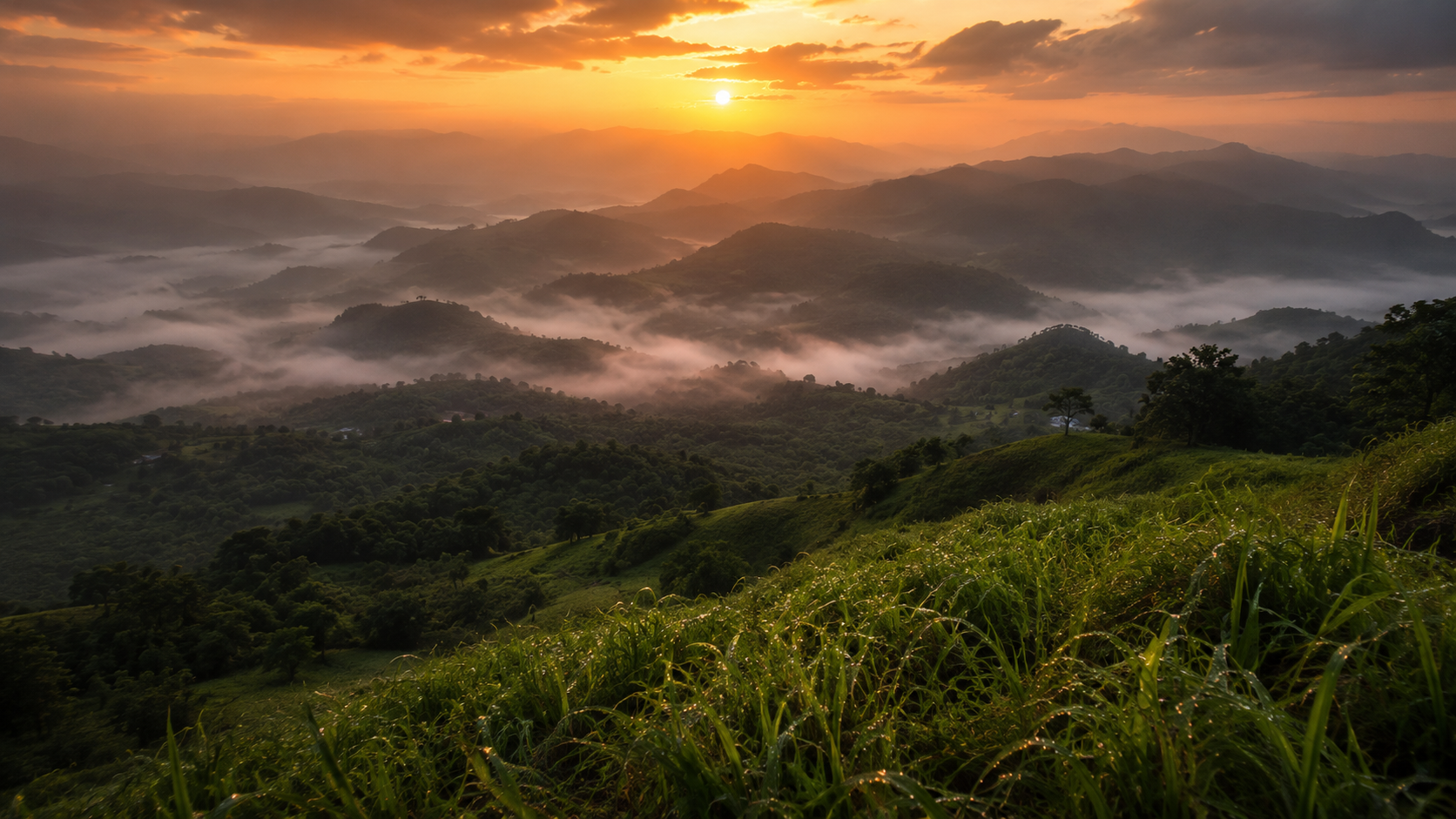
A little further than the others, but worth the extra hours for a proper 2–3 day monsoon break. Panchgani and Mahabaleshwar together offer table-top plateaus wrapped in cloud, dramatic viewpoints over the Konkan region, strawberry farms, and a cooler climate than most of the other spots on this list.
Quick Information
| Detail | Information |
|---|---|
| Best Time | June to September |
| Ideal Duration | 2–3 days |
| Budget | ₹4,000–8,000 per person |
| Nearest Airport | Pune Airport (approx. 120 km) |
| Nearest Railway Station | Pune Railway Station (approx. 120 km, then road) |
| Road Connectivity | Well connected via Pune–Satara highway |
| Best For | Longer weekend getaways, families, honeymooners |
| Difficulty Level | Easy |
Top Attractions
Table Land, Panchgani
- Description: One of Asia’s largest volcanic plateaus, offering sweeping views, though heavy fog is common in peak monsoon.
- Time Required: 1–2 hours
- Entry Fee: Nominal parking/entry fee locally; check current rates
- Tips: Visibility can drop to near zero in fog — good for atmosphere, less so for views on some days.
Mapro Garden, Panchgani
- Description: A strawberry farm and food destination famous for strawberries-and-cream, jams, and squashes.
- Time Required: 1–2 hours
- Entry Fee: Free entry; food and produce priced separately
- Tips: Best visited outside peak strawberry season for a quieter experience, though monsoon itself isn’t strawberry season — check current crop calendar if that’s your main draw.
Arthur’s Seat & Elphinstone Point, Mahabaleshwar
- Description: Dramatic cliff-edge viewpoints overlooking the Konkan valley, often called the “Point of Suicide” viewpoint (Arthur’s Seat) for its sheer drop — dramatic naming, not a safety concern for regular visitors staying behind railings.
- Time Required: 1 hour each
- Entry Fee: Free
- Tips: Stay behind safety railings; monsoon fog can obscure the drop, which is deceptively dangerous.
Venna Lake, Mahabaleshwar
- Description: A popular boating lake surrounded by hills.
- Time Required: 1–2 hours
- Entry Fee: Boating charges apply; check current rates
- Tips: Boating may pause during very heavy rain — check on the day.
Hidden Places
- Devil’s Kitchen — an offbeat, lesser-visited natural rock formation near Mahabaleshwar.
- Kate’s Point — quieter than Arthur’s Seat but with equally impressive views on clear days.
Local Experiences
- Markets: Mahabaleshwar’s main market is famous for strawberry products, honey, and local chikki.
- Culture: A colonial-era hill station atmosphere with old churches and heritage buildings.
- Photography: Fog rolling over Table Land and the valley views from Arthur’s Seat are classic monsoon shots.
- Sunrise: Wilson Point in Mahabaleshwar (weather permitting).
- Sunset: Elphinstone Point on clearer evenings.
- Festivals: Local strawberry festival typically happens outside monsoon season; check current dates if this interests you for a different trip.
Food Guide
- Must-try dishes: Strawberries and cream, mulberry and strawberry crush, and local Maharashtrian thalis.
- Street food: Corn, bhutta, and roadside fruit stalls.
- Restaurants: A good mix of Maharashtrian, North Indian, and multi-cuisine restaurants in both towns.
- Cafes: Several cosy cafes in Panchgani and Mahabaleshwar with garden or valley seating.
- Desserts: Strawberry crush, fudge, and chikki are the local specialities.
- Budget: ₹500–1,200 per person per day for meals.
- Veg/Non-Veg: Both widely available.
Adventure Activities
- Horse riding at Table Land: Price range: Negotiate locally, confirm before starting; Best season: Year-round, weather permitting; Difficulty: Easy; Safety tip: Check the horse’s condition and avoid riding near the plateau edges in fog.
- Boating at Venna Lake: Price range: Confirm current rates; Best season: Year-round except in very heavy rain; Difficulty: Easy; Safety tip: Life jackets should be provided — don’t board a boat without one.
Where to Stay
- Budget: Simple lodges in both towns, ₹1,500–3,000/night.
- Mid-range: Resort-style hotels, ₹4,000–7,000/night.
- Luxury: Several premium resorts with valley views, ₹9,000+/night.
- Hostels: Limited; mostly family-run guesthouses.
- Camping: Not a major feature of this destination; hotels and resorts dominate.
Suggested Itineraries
Itinerary A: Classic Monsoon Weekend (Lonavala–Khandala)
Day 1
- Morning: Depart Mumbai early via the expressway; arrive in Lonavala by mid-morning; check into your stay.
- Afternoon: Visit Bhushi Dam and Lohagad Fort (short trek).
- Evening: Sunset at Rajmachi Point; dinner at a local Maharashtrian thali restaurant.
- Food: Vada pav and chikki tasting through the day.
- Budget: Approx. ₹2,500 for the day (excluding stay).
- Stay: Mid-range resort in Lonavala.
Day 2
- Morning: Visit Duke’s Nose and Tiger’s Point for views.
- Afternoon: Shop for chikki and fudge; leisurely lunch.
- Evening: Drive back to Mumbai, stopping for corn and tea along the ghat.
- Food: Roadside bhutta and misal pav.
- Budget: Approx. ₹1,500 for the day.
- Stay: N/A (return day).
Itinerary B: Peaceful Escape (Bhandardara)
Day 1
- Morning: Drive from Mumbai to Bhandardara via Igatpuri.
- Afternoon: Visit Wilson Dam and Arthur Lake; boating if available.
- Evening: Sunset at the dam viewpoint; home-cooked dinner at your homestay.
- Food: Traditional Maharashtrian thali.
- Budget: Approx. ₹2,000 (excluding stay).
- Stay: Local homestay near the lake.
Day 2
- Morning: Visit Randha and Umbrella Falls (subject to water release timing).
- Afternoon: Short visit to Ratanwadi village and Amruteshwar Temple.
- Evening: Drive back to Mumbai.
- Food: Simple home-style lunch before departure.
- Budget: Approx. ₹1,500 for the day.
- Stay: N/A (return day).
Itinerary C: Adventure & Camping (Kamshet–Karjat)
Day 1
- Morning: Drive to Kamshet; check into a registered lakeside campsite at Pawna Lake.
- Afternoon: Trek to Tikona Fort.
- Evening: Bonfire dinner at the campsite.
- Food: Camp-style Maharashtrian dinner.
- Budget: Approx. ₹2,500 (often bundled with camping package).
- Stay: Lakeside camping.
Day 2
- Morning: Drive to Karjat; visit Bhivpuri Falls and Kondeshwar Temple.
- Afternoon: Riverside lunch at a resort.
- Evening: Drive back to Mumbai.
- Food: Riverside resort meal.
- Budget: Approx. ₹2,000 for the day.
- Stay: N/A (return day).
Estimated Budget (Per Person, 2-Day Trip)
| Category | Approximate Cost |
|---|---|
| Transportation (fuel/shared cab/train) | ₹800–2,500 |
| Accommodation (1 night) | ₹1,200–6,000 |
| Food | ₹800–2,000 |
| Activities (treks, boating, entry fees) | ₹200–1,500 |
| Shopping (chikki, souvenirs) | ₹300–800 |
| Emergency buffer | ₹500–1,000 |
| Estimated Total | ₹3,800–13,800 |
These figures vary widely by destination, season, and travel style. Always check current prices for stays and activities before finalising your trip.
Packing Checklist
- Waterproof/quick-dry clothing and a spare set of clothes
- A good quality raincoat or poncho (umbrellas are often useless in ghat winds)
- Trekking shoes or sandals with strong grip — avoid regular sneakers or slippers
- A dry bag or waterproof pouch for phones, cameras, and documents
- A basic first-aid kit, including anti-fungal cream and ORS sachets
- Insect repellent (leeches and mosquitoes are common in monsoon forests)
- A power bank, since remote areas may have unreliable charging access
- Cash in small denominations — card/UPI acceptance can be patchy in remote spots
- A torch or headlamp for evening walks in low-connectivity areas
- Reusable water bottle and some dry snacks for long drives
Safety Tips
- Check weather forecasts and landslide/road advisories before you leave — Maharashtra Tourism and local police often issue alerts during heavy rain.
- Avoid trekking during active thunderstorms or red/orange weather alerts.
- Never stand at the edge of waterfalls or swim in flooded rivers — currents are far stronger than they look, and drowning incidents are reported every monsoon at popular spots.
- Drive slowly on ghat roads; visibility drops quickly in fog, and roads can be slippery.
- Stick to marked trekking trails and avoid shortcuts, especially near cliff edges.
- Carry a charged phone and inform someone of your route, especially for treks like Harihar or Kalsubai.
- Avoid alcohol before or during treks and waterfall visits.
- Keep an eye on children and elderly family members near dams, lakes, and viewpoints.
Photography Tips
- Shoot early morning or just after a rain shower for the best light and clearest skies.
- Use a lens hood or rain cover for your camera — monsoon spray travels further than you’d expect.
- A polarising filter helps cut glare on wet leaves and roads.
- For waterfall shots, a slightly slower shutter speed (with a tripod or stable surface) gives that classic silky-water effect.
- Keep a microfiber cloth handy to wipe your lens frequently.
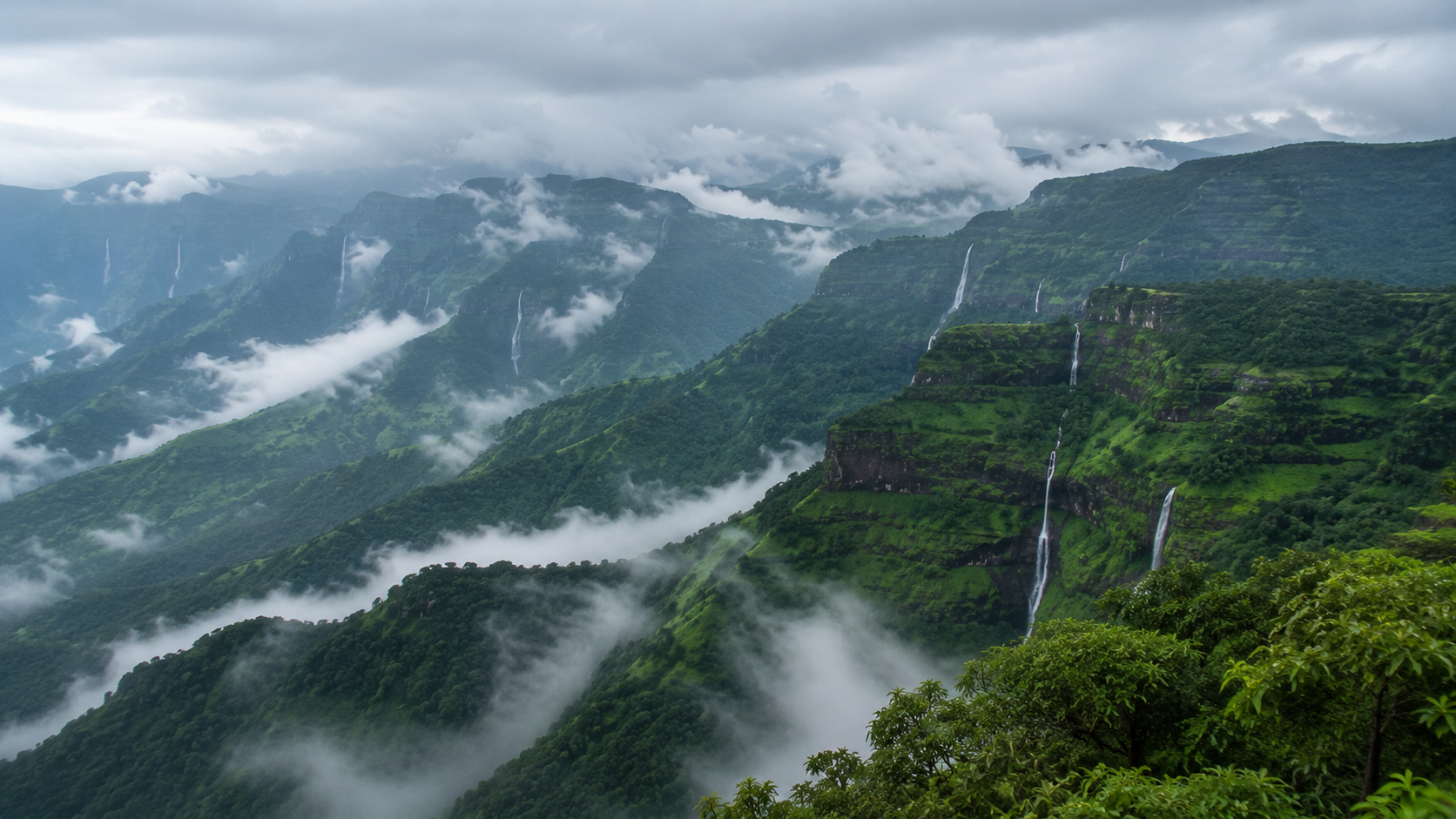
- Wide-angle shots work best for ghat roads and valley views; a zoom lens helps for waterfalls viewed from a safe distance.
Frequently Asked Questions
1. Which is the best monsoon place near Mumbai for a one-day trip? Karjat and Lonavala are the easiest for a single-day trip, both under 90 km from Mumbai with good road and rail connectivity.
2. Is it safe to travel to these hill stations during heavy rainfall? Generally yes, but you should always check weather and road advisories before travelling, and avoid travel during red-alert weather warnings or landslide-prone conditions.
3. Which monsoon destination near Mumbai is best for families with young children? Lonavala, Khandala, and Panchgani–Mahabaleshwar are the most family-friendly, with easier terrain and more amenities.
4. Can I visit these places by public transport? Yes — Lonavala, Karjat, Igatpuri, and Matheran are all well connected by local and long-distance trains from Mumbai.
5. Is Matheran really vehicle-free? Yes, private vehicles stop at Dasturi Naka; you’ll need to walk, ride a horse, or take a hand-pulled cart or the toy train into the town itself.
6. What should I avoid doing during a monsoon trip to these hill stations? Avoid standing too close to waterfalls or riverbanks, avoid trekking during active heavy rain, and avoid off-trail shortcuts near cliffs and viewpoints.
7. Are flamingos guaranteed at Malshej Ghat? No — flamingo sightings at Pimpalgaon Joga depend on rainfall and water levels each year, so treat it as a bonus rather than a guarantee.
8. What is the ideal duration for a monsoon trip near Mumbai? Most of these destinations work well as a 1–2 day weekend trip; Panchgani–Mahabaleshwar is better suited to a longer 2–3 day break given the distance.
9. Is camping safe near Pawna Lake during monsoon? Camping is popular here, but always book with a registered, permitted operator, since unregulated camping near the water’s edge has led to safety concerns in the past.
10. What is the best time within monsoon to visit — June, July, August, or September? July and August typically bring the heaviest rainfall and fullest waterfalls, while June and September offer greenery with somewhat fewer downpours — useful if you prefer lighter rain during your trip.
11. Do I need a 4×4 vehicle for these trips? No, all the destinations listed here are accessible by regular cars via well-maintained highways and ghat roads, though careful, slow driving is recommended in heavy rain.
12. Are these destinations bike-trip friendly? Yes, Lonavala, Khandala, Karjat, and Kamshet are popular biking routes from Mumbai, though riders should carry proper rain gear and drive cautiously on wet, curvy ghat roads.
Conclusion
The best thing about monsoon travel near Mumbai is how little effort it takes to feel like you’ve escaped somewhere far away. A two-hour drive out of the city, and suddenly you’re standing under a waterfall that didn’t exist last month, eating hot bhajiya with your feet dangling off a misty viewpoint. Whether you want an easy family weekend in Lonavala, a quiet retreat in Bhandardara, or an adrenaline-filled trek up Harihar, this stretch of the Sahyadris has a monsoon escape for exactly the kind of traveller you are. So keep an eye on the forecast, pack that raincoat, and go chase the rain — it won’t be around forever.
Planning your monsoon getaway and not sure where to start? 365 Days Journeys can help you put together:
- A personalised itinerary based on your travel dates, group size, and interests
- Hotel and resort recommendations across every budget
- Group tour packages for friends, families, or corporate offsites
- Road trip planning, including route suggestions and stop-by-stop guidance
- Food trails built around the best local dishes at each destination
- A custom travel consultation to fine-tune every detail of your trip
Reach out to 365 Days Journeys today, and let’s plan a monsoon trip you won’t stop talking about.