Trimbakeshwar Temple Guide: Timings, Rituals & Complete Travel Tips (2026)

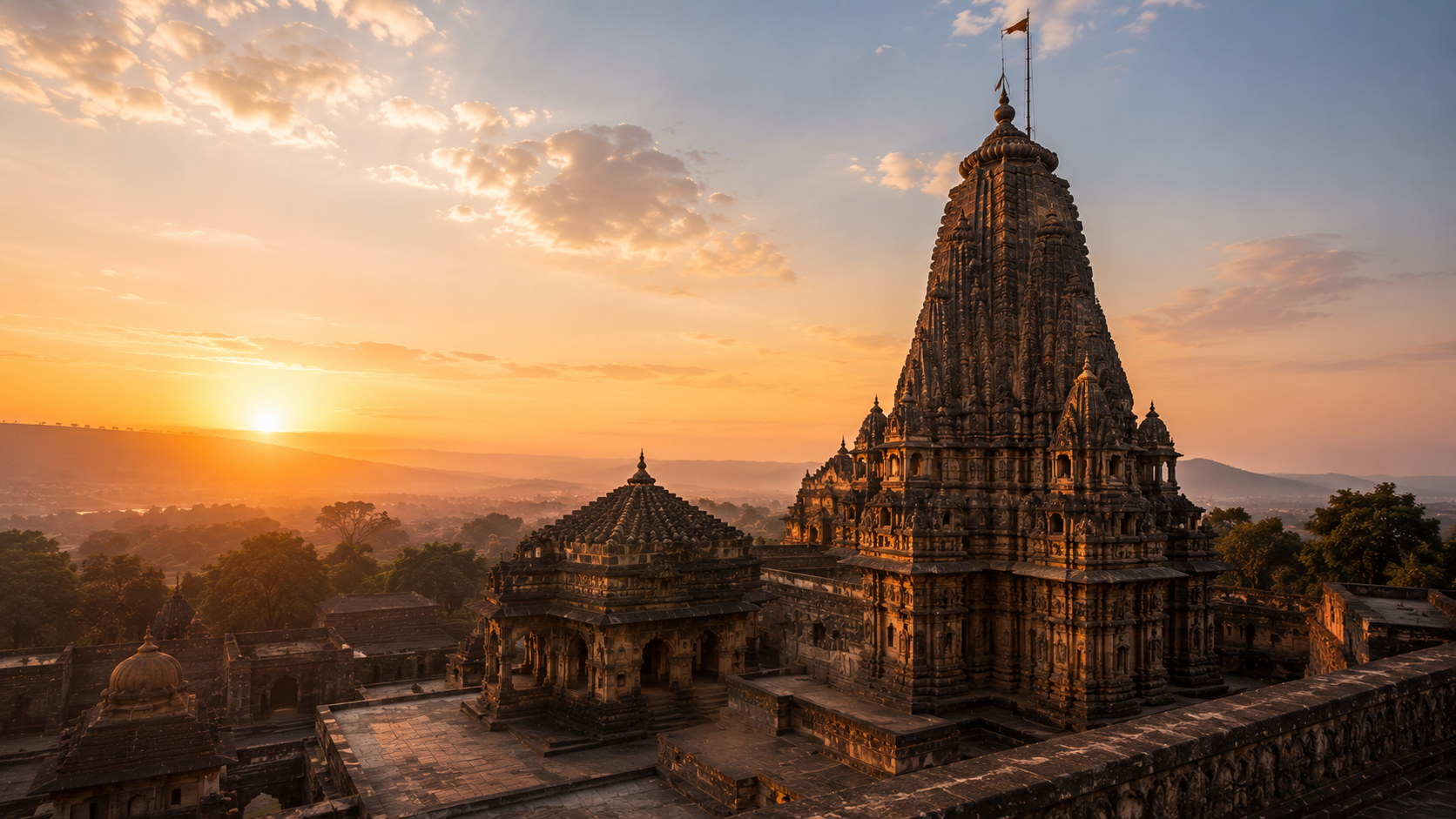
Trimbakeshwar isn’t just another stop on a Nashik itinerary — for millions of devotees, it’s the destination itself. As one of the twelve Jyotirlingas and the site believed to be the origin of the sacred Godavari River, this temple draws pilgrims from across the country for its unique three-faced lingam representing Brahma, Vishnu, and Shiva, and for rituals like Narayan Nagbali and Kalsarpa Dosh puja that are performed here and in very few other places in India.
This guide covers everything you need to plan a respectful, well-organised visit — current darshan timings, the dress code, what the major rituals actually involve, how to get there, and what else is worth seeing nearby. Whether this is a quick stop on a Nashik weekend or the primary purpose of your trip, here’s what to know before you go.
Quick Information
| Detail | Information |
|---|---|
| Significance | One of the twelve Jyotirlingas; believed site of the Godavari River’s origin |
| Temple Timings | Generally early morning to evening, with specific opening/closing and aarti timings set by the temple trust — always confirm current timings before visiting |
| Ideal Duration | Half day for darshan; a full day if combining with Brahmagiri hill and nearby sites |
| Budget | ₹500–3,000+ per person, depending on whether you’re booking special rituals |
| Nearest Airport | Nashik Airport (Ozar), or Mumbai/Pune airports with onward road travel |
| Nearest Railway Station | Nashik Road Railway Station (approx. 28 km) |
| Road Connectivity | Well connected via Nashik city, roughly 30 km from central Nashik |
| Best For | Pilgrims, devotees, cultural and heritage travellers |
| Dress Code | Traditional Indian attire recommended; men may be required to remove shirts for the inner sanctum in keeping with temple tradition |
Timings, fees, and ritual booking procedures are set and revised by the temple trust — always verify current details through official sources before travelling.
About Trimbakeshwar Temple
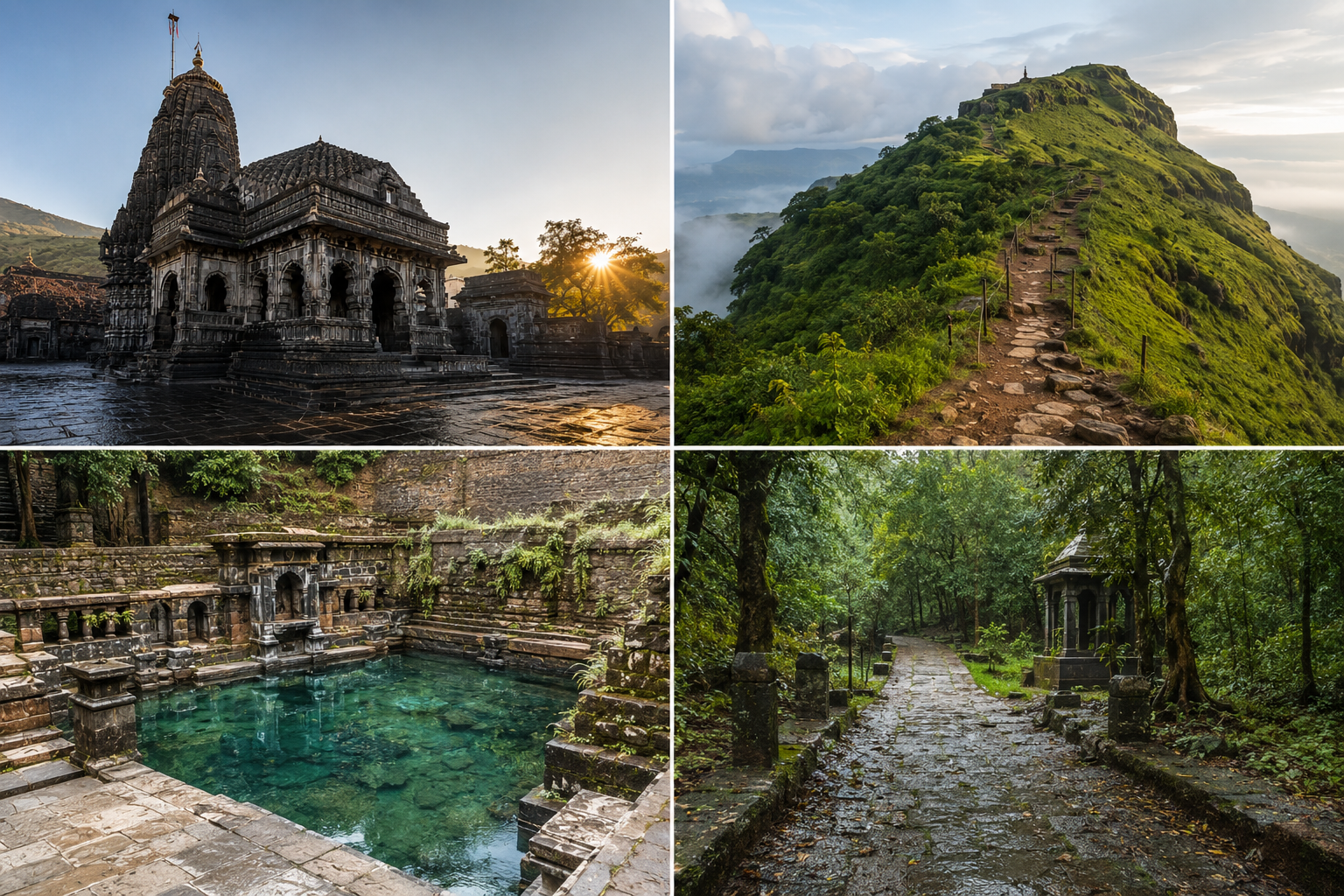
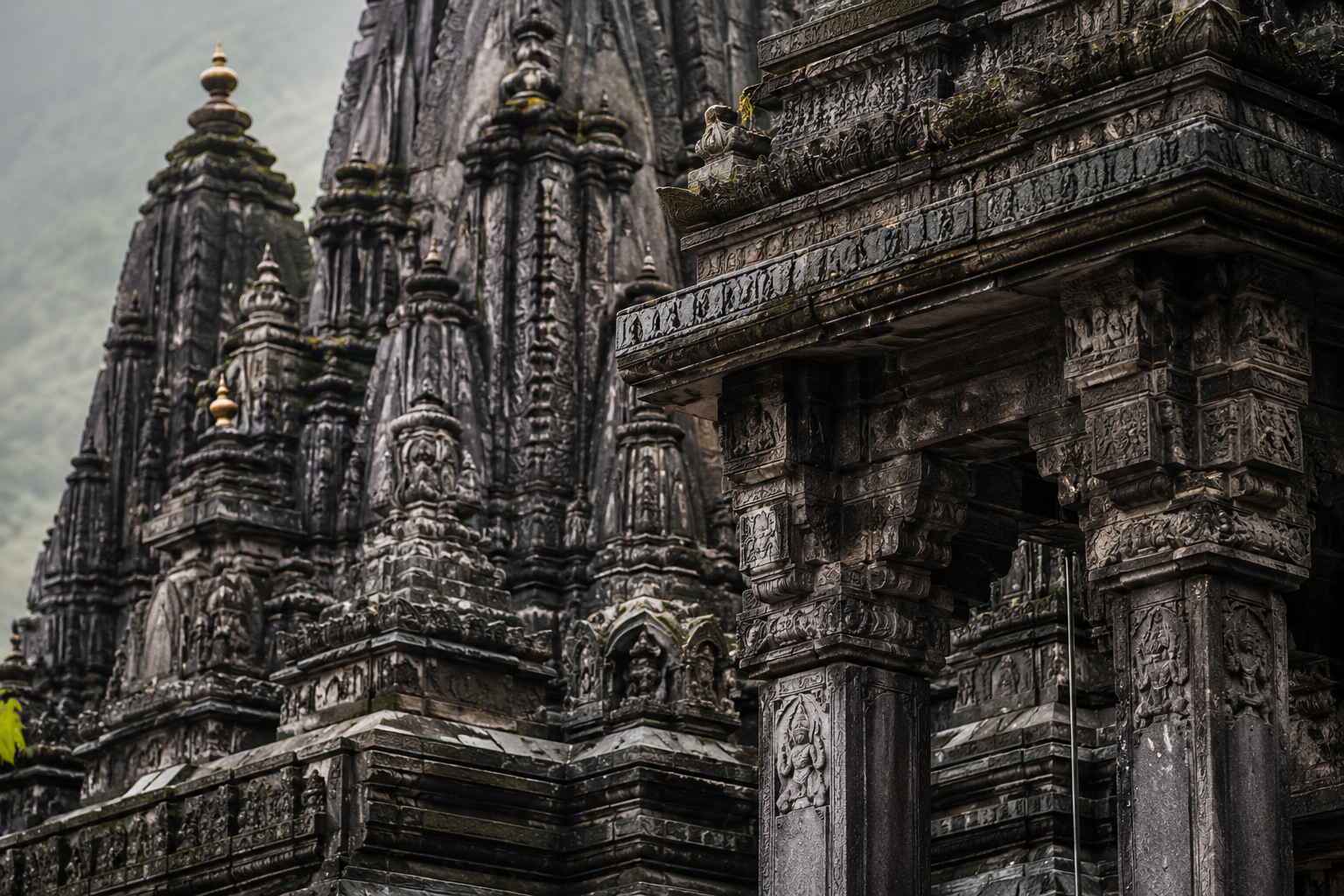
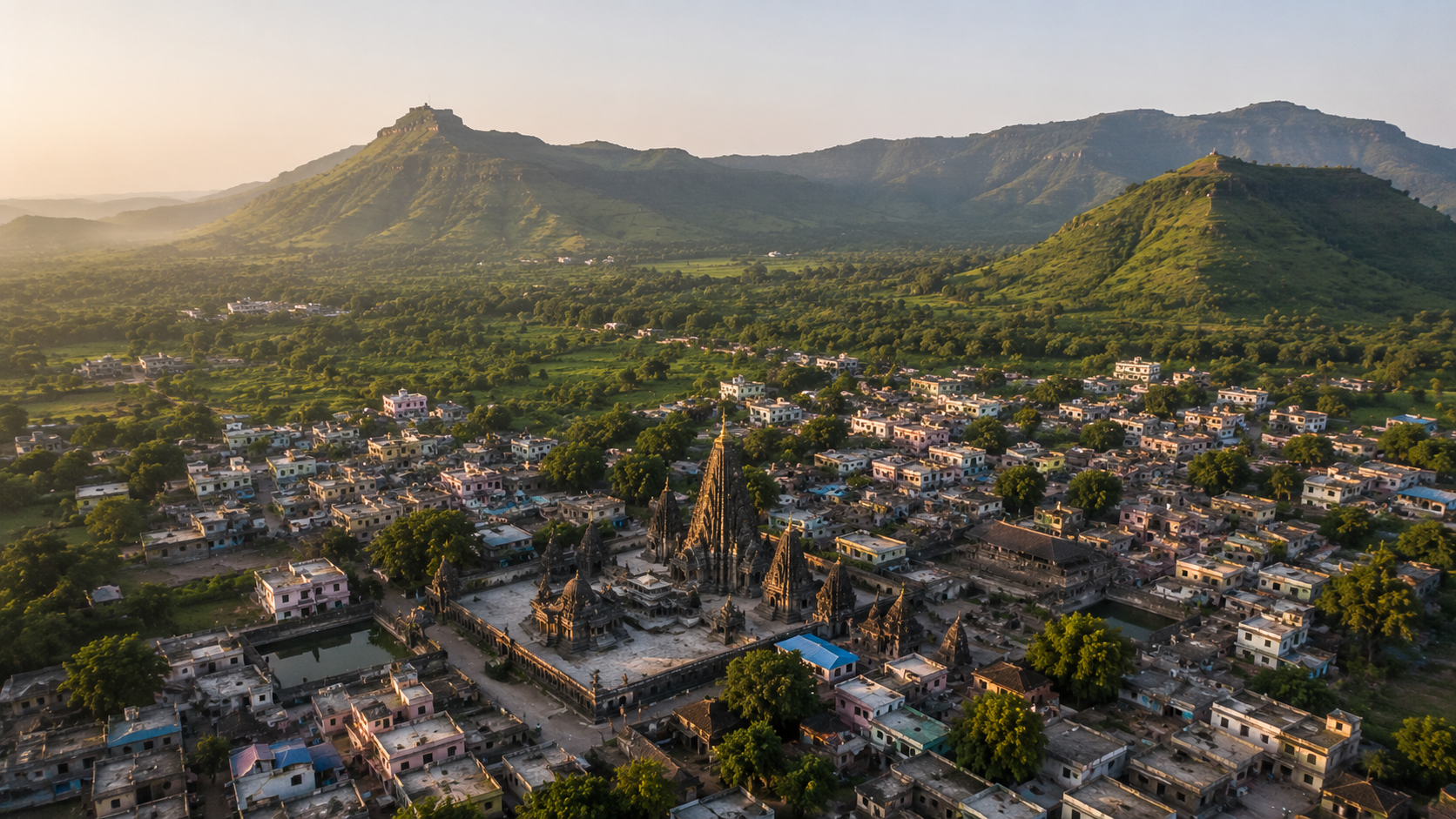
Trimbakeshwar’s central deity is unusual among the Jyotirlingas — the lingam here is said to have three faces representing Brahma, Vishnu, and Mahesh (Shiva), covered by a jewelled crown that is displayed to devotees at specific times. The temple structure seen today, built from black stone in a style typical of the region, dates to the 18th century, constructed under the patronage of the Peshwas, though the site’s religious significance is understood to go back much further.
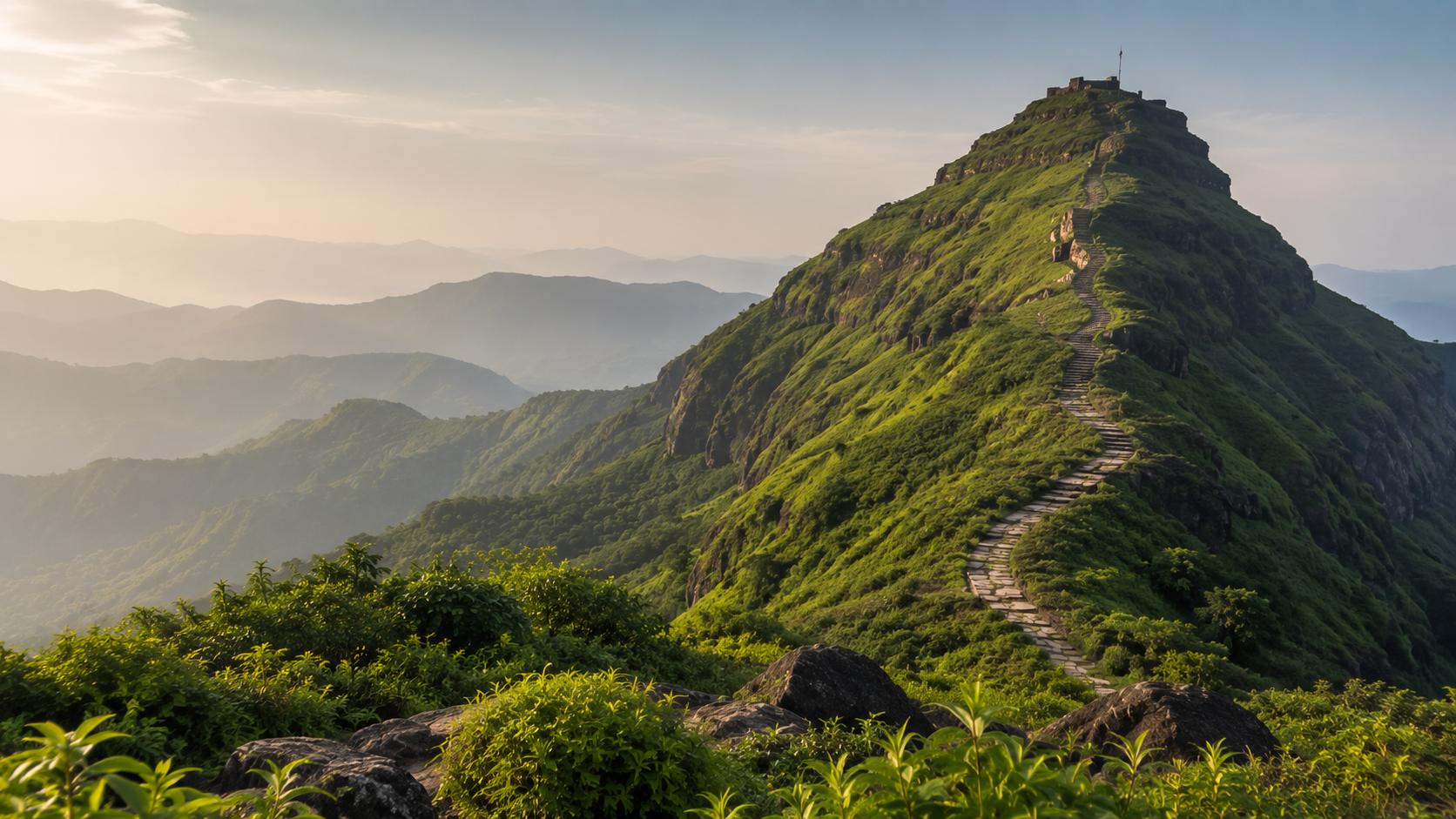
The temple sits at the base of Brahmagiri hill, which is traditionally regarded as the source of the Godavari River — one of India’s most significant rivers, and this connection between the temple, the hill, and the river is central to why Trimbakeshwar holds such deep spiritual importance for pilgrims.
Darshan Timings & Entry
Temple timings are set and periodically revised by the temple trust, generally covering an early morning opening through to an evening closing, with specific windows for the main aarti ceremonies. Because these details change and can also shift during festivals or special occasions, it’s best to check the current schedule directly with the temple trust or a verified local source shortly before your visit, rather than relying on any fixed timing published elsewhere.
General visitor guidance:
- Expect significant crowds on weekends, during Shravan month, and around Mahashivratri — plan for longer queues during these periods.
- A general darshan queue is available for all visitors; some temples of this stature also offer a paid, faster-track darshan option, so ask on arrival if a quicker route is available and what it involves.
- Photography inside the inner sanctum is typically restricted — check current rules on arrival and be respectful of temple staff instructions.
Dress Code & Temple Etiquette
Trimbakeshwar follows a fairly traditional dress code, and being prepared for it in advance makes the visit smoother:
- For men: Traditional attire is recommended. It’s common practice at this temple for men to remove their shirts before entering the inner sanctum area, in keeping with long-standing temple tradition — wearing an undershirt or being prepared for this beforehand can help.
- For women: Modest traditional attire such as a saree or salwar kameez is recommended; avoid short or revealing clothing.
- General etiquette: Remove footwear before entering the temple premises, maintain silence and respect within the sanctum, and follow the instructions of temple staff and priests, particularly during rituals.
- Leather items are traditionally discouraged within many temple precincts in India — check current local guidance on this before entering.
Rituals Performed at Trimbakeshwar
Trimbakeshwar is one of the few temples in India where certain highly specific rituals are traditionally performed, drawing devotees from across the country specifically for these ceremonies.
Narayan Nagbali Puja
What it is: A ritual traditionally performed to address ancestral doshas (afflictions believed to be caused by unresolved ancestral matters) and issues related to serpent-related doshas. Duration: Typically performed over three days, following specific ritual protocols. Booking: Performed only by registered, temple-recognised priests — always book through verified, temple-affiliated sources rather than unofficial agents who approach visitors informally.
Kalsarpa Dosh Puja
What it is: A ritual addressing what is traditionally known as Kalsarpa Dosh in Vedic astrology, believed to occur under specific planetary alignments. Duration: Generally a single-day ritual, though this can vary. Booking: As with Narayan Nagbali, book only through officially recognised priests or the temple trust’s verified channels.
A practical note: Both these rituals involve real time and cost commitments, and unfortunately, Trimbakeshwar has also seen instances of unauthorised individuals approaching pilgrims with unofficial “priest” services. Always verify credentials through the temple trust directly, agree on costs in writing before any ritual begins, and be wary of anyone creating urgency or pressure around a specific dosha diagnosis.
How to Reach Trimbakeshwar
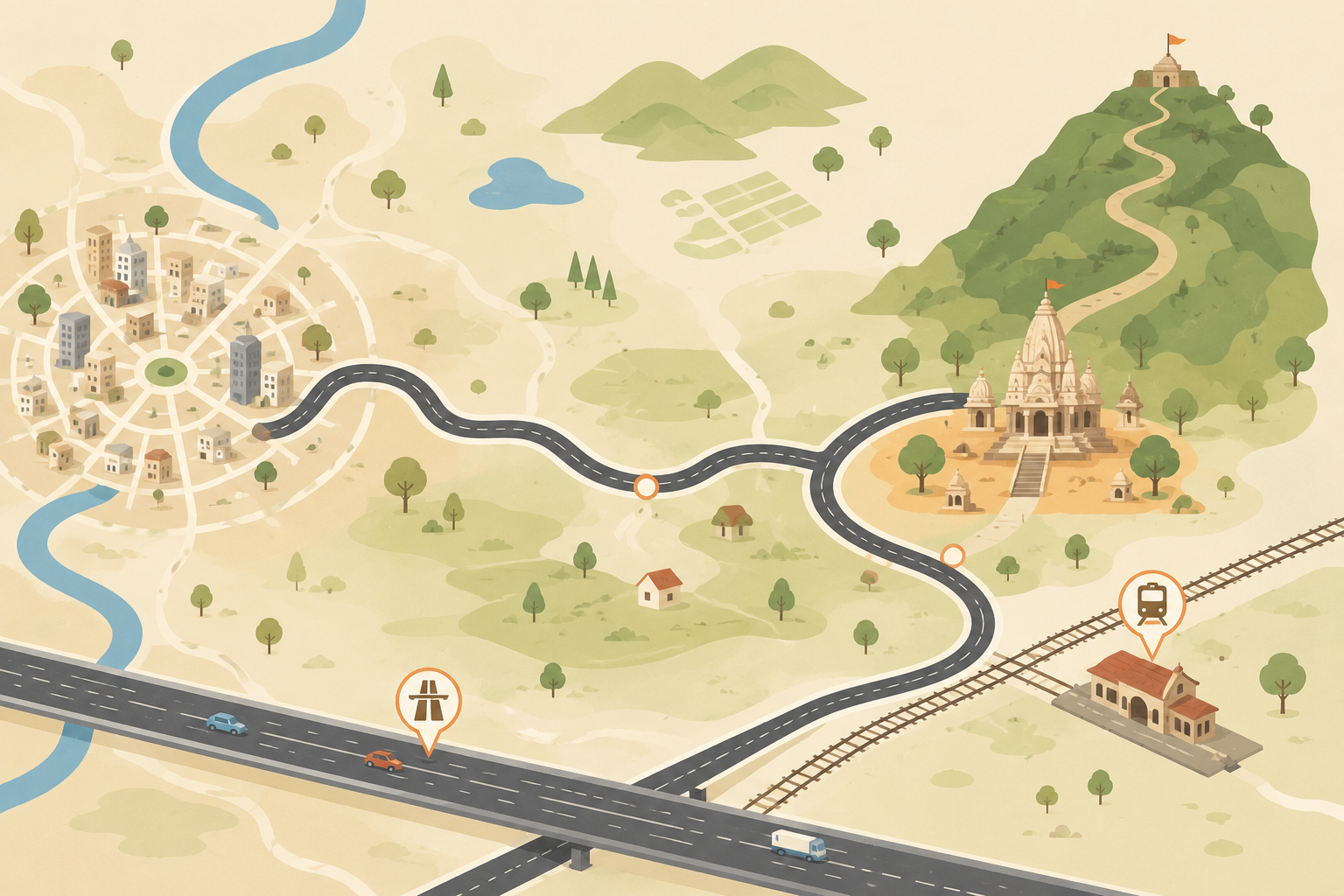
From Nashik city: Approximately 30 km, roughly a 45-minute to 1-hour drive via local roads.
From Mumbai: Approximately 190–200 km via the Mumbai–Nashik highway (NH160), then a local road to Trimbakeshwar — roughly a 4–4.5 hour drive.
From Pune: Approximately 210 km, roughly a 4.5–5 hour drive via Nashik.
By rail: The nearest major railway station is Nashik Road; from there, local taxis and buses connect to Trimbakeshwar.
By air: Nashik Airport (Ozar) has limited connectivity; most travellers fly into Mumbai or Pune and continue by road.
Nearby Attractions
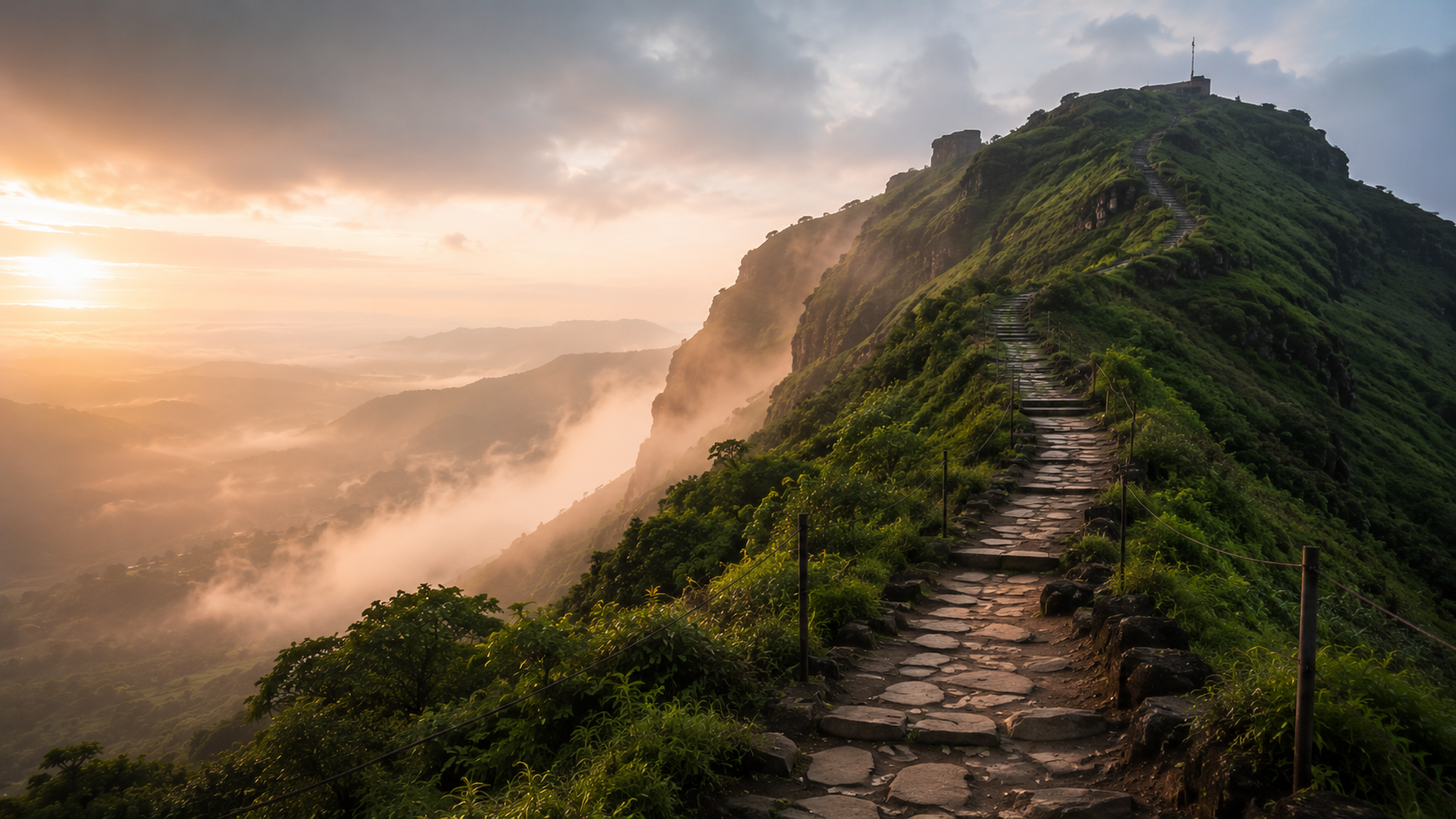
Brahmagiri Hill: A moderate trek offering panoramic views and a chance to visit the traditionally regarded origin point of the Godavari River — a natural pairing with a temple visit.
Gangadwar: A scenic spot along the Brahmagiri trail, associated with the river’s descent, popular with pilgrims making the climb.
Anjneri Hill: A short drive away, associated in some traditions with the birthplace of Lord Hanuman, offering another moderate trek option.
Nashik City: Just 30 km away, offering the Panchavati ghats, Kalaram Temple, and Nashik’s wine country for those extending their trip.
Food Guide
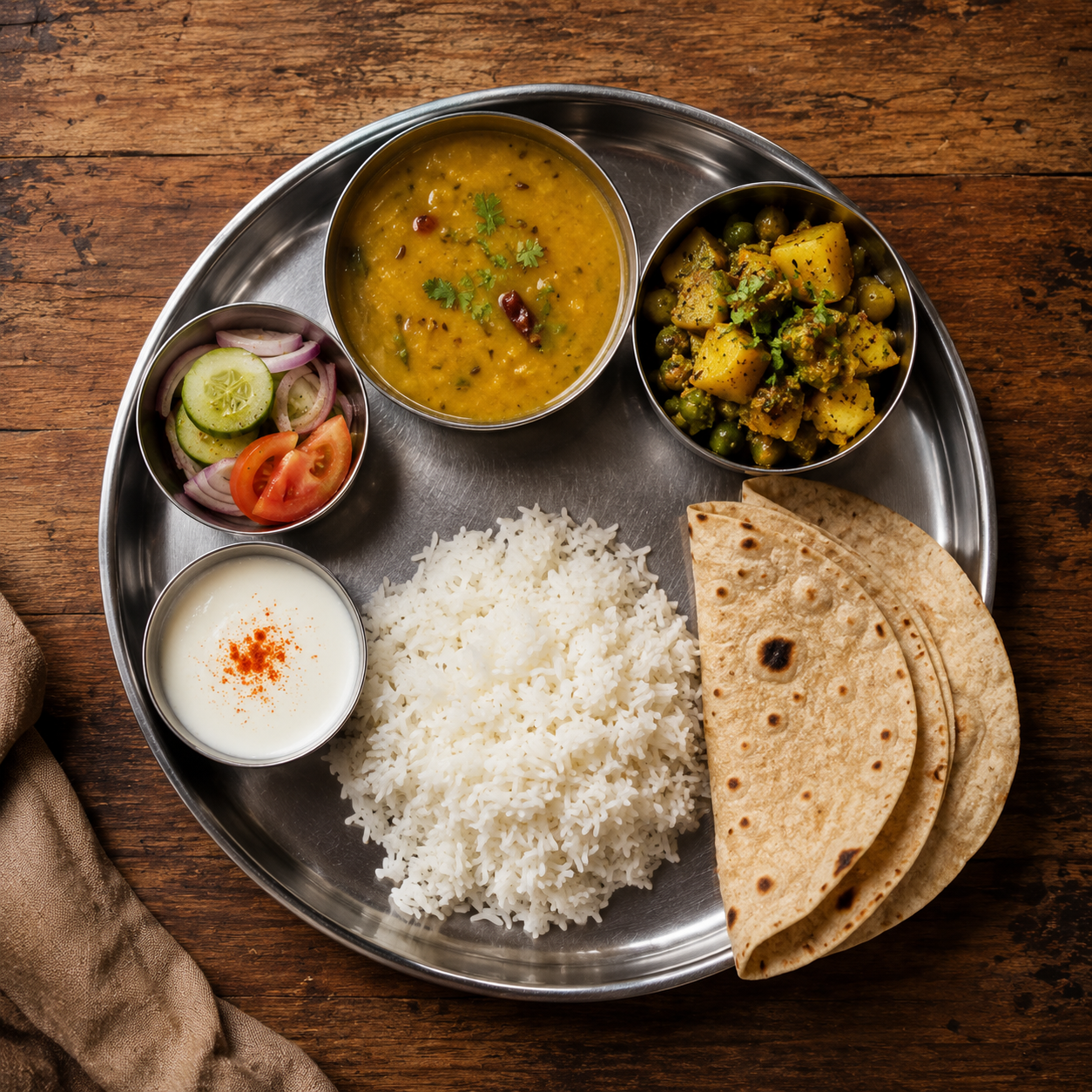
Must-try: Simple, vegetarian temple-town food — expect thalis, poha, and misal pav given the proximity to Nashik.
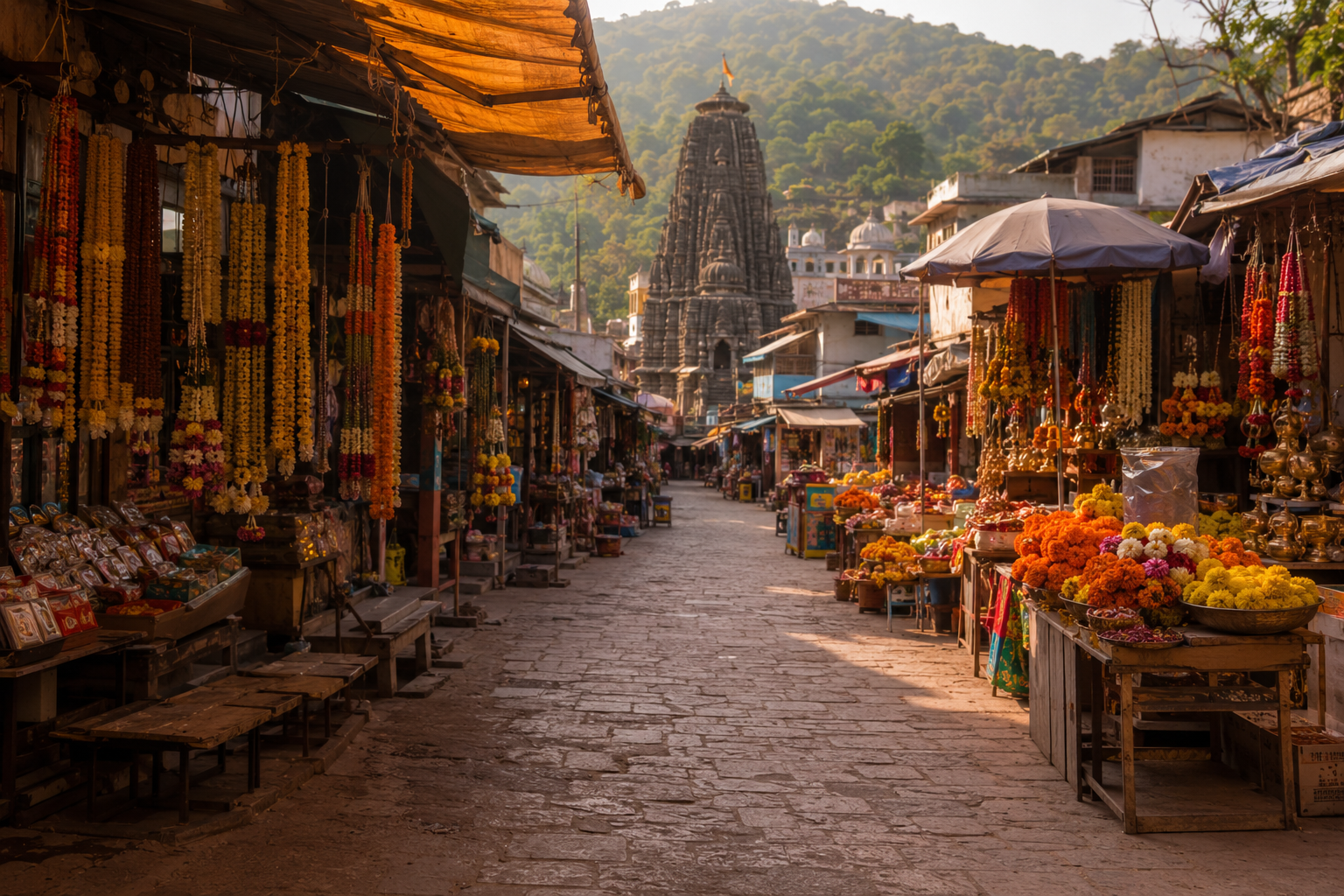
Street food: Basic snack stalls near the temple entrance sell tea, farsan, and light bites for pilgrims.
Restaurants: Small, local vegetarian eateries dominate the temple town; expect straightforward, unpretentious food rather than variety.
Budget: ₹200–500 per person for meals.
Veg/Non-Veg: Almost entirely vegetarian, in keeping with the temple town’s religious character.
Where to Stay
Budget: Simple pilgrim lodges and guesthouses in Trimbakeshwar town, ₹800–2,000/night.
Mid-range: Comfortable hotels in Nashik city, a short drive away, ₹2,500–5,000/night.
Luxury: Premium hotels and vineyard resorts are more readily available in Nashik city than in Trimbakeshwar town itself.
Dharamshalas: Several pilgrim rest-houses (dharamshalas) operate in Trimbakeshwar, offering basic, affordable accommodation geared toward devotees — a good option if you’re visiting primarily for darshan or a ritual.
Suggested Itinerary
Half-Day Visit (Darshan Only)
- Morning: Arrive early to avoid peak crowds; join the darshan queue.
- Late Morning: Complete darshan, take in the temple architecture, and visit nearby stalls for prasad.
- Afternoon: Head back to Nashik city or continue your onward journey.
Full-Day Visit (With Brahmagiri Hill)
- Morning: Early darshan at the temple.
- Late Morning to Afternoon: Trek up Brahmagiri hill to Gangadwar and the traditionally regarded source of the Godavari.
- Evening: Return to Trimbakeshwar town or Nashik city for the night.
Multi-Day Visit (For Ritual Bookings)
If you’re planning to undertake Narayan Nagbali or another multi-day ritual, allow for the full duration specified by your registered priest, plus a buffer day, and arrange accommodation in Trimbakeshwar town itself for convenience.
Estimated Budget
| Category | Approximate Cost |
|---|---|
| Transportation (fuel/train, round trip from Mumbai) | ₹1,500–3,500 |
| Accommodation (per night, if staying over) | ₹800–5,000 |
| Food | ₹200–500 per day |
| General darshan | Free (donations optional) |
| Special rituals (Narayan Nagbali, Kalsarpa Dosh, etc.) | Varies significantly — confirm current costs directly with the temple trust or registered priests |
| Emergency buffer | ₹300–800 |
Ritual costs vary considerably depending on the specific puja and priest involved — always confirm total costs in writing before proceeding with any booking.
Packing Checklist
- Traditional, modest clothing suitable for temple visits
- An extra layer or shawl, useful for both temple etiquette and cooler evenings
- Comfortable footwear that’s easy to remove and carry
- A small bag for carrying footwear if lockers aren’t available
- Cash in small denominations for donations, prasad, and local purchases
- Any documentation related to pre-booked rituals
- Trekking shoes if planning to climb Brahmagiri hill
- A water bottle, particularly for the hill trek
Safety & Practical Tips
- Verify any priest or ritual booking directly through the temple trust or clearly registered, verifiable sources — be cautious of anyone approaching you informally near the temple offering “special” or “urgent” rituals.
- Agree on and confirm all costs in writing before any ritual begins, to avoid disputes afterward.
- Keep personal belongings secure in crowded darshan queues, particularly during festivals.
- Stay hydrated and wear sun protection if attempting the Brahmagiri hill trek.
- Check weather conditions before the hill trek during monsoon, as trails can become slippery.
- If visiting during Shravan month or Mahashivratri, plan for significantly longer queues and consider arriving well before opening time.
Frequently Asked Questions
1. What makes Trimbakeshwar Temple unique among the Jyotirlingas? Trimbakeshwar is unique for its lingam, which is said to have three faces representing Brahma, Vishnu, and Mahesh, and for its association with Brahmagiri hill as the traditionally regarded source of the Godavari River.
2. What are the temple’s darshan timings? Timings are set and periodically revised by the temple trust, generally spanning early morning to evening with specific aarti windows — always confirm the current schedule before your visit, as it can change.
3. What is the dress code at Trimbakeshwar Temple? Traditional, modest attire is recommended for all visitors, and men are commonly expected to remove their shirts before entering the inner sanctum area, in keeping with temple tradition.
4. How do I book Narayan Nagbali or Kalsarpa Dosh puja at Trimbakeshwar? These rituals should be booked only through registered, temple-recognised priests or verified official channels — be cautious of unofficial agents who approach visitors informally near the temple.
5. How far is Trimbakeshwar from Nashik city? Trimbakeshwar is approximately 30 km from Nashik city, roughly a 45-minute to 1-hour drive.
6. How far is Trimbakeshwar from Mumbai? Trimbakeshwar is approximately 190–200 km from Mumbai, roughly a 4 to 4.5 hour drive via the Mumbai–Nashik highway.
7. Can I combine a Trimbakeshwar visit with a trek up Brahmagiri hill? Yes, this is a popular combination, allowing pilgrims to visit both the temple and the traditionally regarded source of the Godavari River at Gangadwar on Brahmagiri hill.
8. Is photography allowed inside the temple? Photography inside the inner sanctum is typically restricted — check current rules with temple staff on arrival and follow their guidance.
9. What is the best time to visit Trimbakeshwar to avoid crowds? Weekdays outside of Shravan month, Mahashivratri, and major festival periods generally see smaller crowds; arriving early in the morning also helps avoid the longest queues.
10. Is accommodation available in Trimbakeshwar town itself? Yes, several pilgrim lodges and dharamshalas operate in Trimbakeshwar town, offering basic, affordable stays geared toward devotees, though more varied hotel options are available in nearby Nashik city.
Conclusion
Trimbakeshwar carries a weight that few temples in India do — a Jyotirlingam, a river’s mythological source, and rituals performed here that pilgrims travel across the country specifically to undertake. Whether you’re here for a quick darshan on a Nashik weekend or a longer visit built around a specific ritual, a little preparation around timings, dress code, and verified booking channels goes a long way toward making the visit smooth and genuinely meaningful.
Planning a visit to Trimbakeshwar and want help with the details? 365 Days Journeys can put together:
- A personalised pilgrimage itinerary matched to your travel dates and purpose of visit
- Verified guidance on ritual bookings, helping you avoid unofficial agents
- Stay recommendations in both Trimbakeshwar town and nearby Nashik
- Custom route planning from Mumbai, Pune, or Nashik
- A combined itinerary if you’d like to pair your visit with Nashik’s wine country or Brahmagiri hill
Get in touch with 365 Days Journeys to plan a Trimbakeshwar visit that’s smooth, respectful, and well-informed.